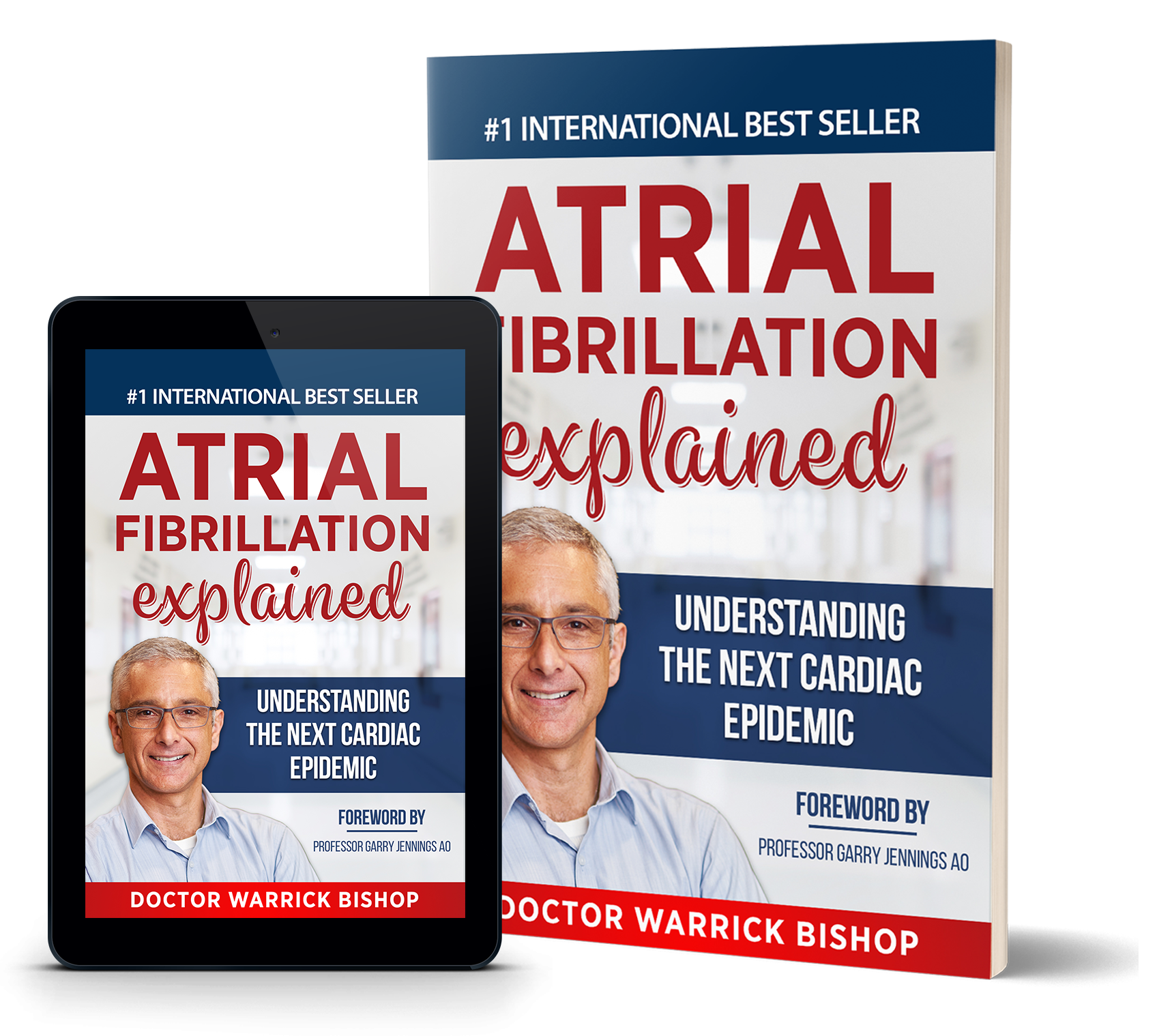
Welcome to Dr. Warrick's podcast channel. Warrick is a practicing cardiologist and author with a passion for improving care by helping patients understand their heart health through education. Warrick believes educated patients get the best health care. Discover and understand the latest approaches and technology in heart care and how this might apply to you or someone you love. Hi, my name's Dr. Warrick Bishop and welcome to my podcast channel. Today I would like to talk about foods that could impact atrial fibrillation. A few foods that could be important or implicated when we think about atrial fibrillation and the impact it could have on, well... the impact diet could have on your heart so let's start off with the obvious one and that's alcohol now alcohol directly can have a role impacting the heart and we know that if people go out on a binge and drink far too much that this can kick off atrial fibrillation just of its own and so to such a degree that and i can't remember the exact term but there's a There's a term we use in medicine which is something like Monday morning arrhythmia. And it's common enough that some blokes, most commonly, sometimes the ladies, but most commonly the blokes will go out and have a big binge on a Friday night or a Saturday night, notice their hearts out of rhythm and turn up on a Monday morning. So alcohol... specifically can trigger atrial fibrillation and binging will kick it off but remember alcohol can also be associated with hypertension so regular consumption or too much alcohol can raise your blood pressure probably one or two glasses a day maybe even up to three for men to maximum for women might lower blood pressure and help with relaxation but mark any more than that and we start to see blood pressure raise sorry we start to see alcohol raise blood pressure levels too much alcohol of course could also be tied up with putting on weight and obesity is closely linked to atrial fibrillation and lastly alcohol consumption can be associated with deranged sleep so if you have deranged sleep that can certainly drive the central nervous system and trigger or precipitate atrial fibrillation. Well one of the dietary components that we've talked about over the years for atrial fibrillation has been caffeine and we've often suggested that people abstain completely. Well it turns out that in recent time the data around that is not quite as clear. certainly there are some individuals who will report if they have a cup of coffee that'll trigger their atrial fibrillation and obviously if that's the case those individuals should refrain that just makes sense however some more recent research would tell us that maybe one two or even up to three cups of coffee spread throughout the day may not be unreasonable and could even be, for the average person, somewhat protective in terms of stimulation or precipitation of atrial fibrillation. Well, a single coffee, an espresso coffee shot, has about 90 to 100 milligrams of caffeine in it. So three coffees a day, 300-odd milligrams, is probably fair and reasonable and probably not putting you at increased risk of atrial. fibrillation remember though that the energy drinks which include caffeine carry can have really quite high levels of caffeine in them and more than that they can have other chemicals which can be stimulant plus they can have a large sugar hit which all together can have a significant increase risk of development of atrial fibrillation so those energy drinks are probably Best avoided if you have had atrial fibrillation in the past. We wonder about fats, and we talk about fats with some regularity. Certainly trans fats are a no-no, and we know that from a dietary and cardiovascular perspective, and there's some research to suggest that trans fats, and these are fats that have been manipulated or manufactured, can increase the likelihood of atrial fibrillation. Saturated fats, these are animal fats. may have a role but it's not really clear and an interesting bit of research back in 2017 told us that if we substitute saturated fats which is mainly animal fats butter the fat off the tail of your chop if we swap that with polyunsaturated fats which is mainly seed type oils then there may actually be an increase in atrial fibrillation. And possibly this is related to an increase in the inflammation that might be associated with these polyunsaturated fatty acids. Now, the fatty acids that we're probably most interested in focusing in on are the monounsaturates, particularly from things like olive oil, nuts and avocados. suggestion that these monounsaturates may lower risk of atrial fibrillation remember that as we think about fat within the diet remember that fat or obesity is really a major player and keeping that weight down is really important now eating fat doesn't necessarily make you fat i think we're all starting to realize that that is not a standard dogma but certainly as we think about different fats it's worth remembering that weight loss is a powerful mitigator of future atrial fibrillation and weight gain, a powerful driver. So we do know that loss of somewhere around 10% of body weight can literally halt or markedly modify the progression that someone might see for their own atrial fibrillation. Well, salt's another one that comes up fairly regularly and salt or sodium consumption is linked to raised blood pressure. And raised blood pressure drives the work that the heart has to do and drives the work that the atria has to do to squeeze blood into the lower chamber of the heart, the ventricle. So raised blood pressure through raised salt consumption is certainly something to try and avoid if you're at increased risk of atrial fibrillation. processed foods which are generally soaked in salt carved in salt are really a bit of a no-no if you're looking to keep that blood pressure under some control the other thing of course is what is the guideline for salt well it's just under about two and a half grams per day and if you're trying to figure out what two and a half grams of salt looks like take a teaspoon and put about a third on the teaspoon so less than a half but about a third. And that'll give you an idea of what about 2.5 grams of salt is in the day. And that's pretty well current World Health Organization guidelines. Well, sugar is probably best avoided if you have a risk of atrial fibrillation as well. And we know that diabetic patients have nearly a 40% increase in the likelihood of them developing atrial fibrillation. So there's this... interplay of what appears to be raised sugars in the bloodstream and atrial fibrillation so it sort of makes a bit of sense that keeping sugars down is not a bad idea well that whole interplay may well be around insulin levels because insulin is probably linked to the sympathetic nervous system and probably linked to cortisol and inflammatory processes. So there's good reason to keep your sugar levels down for that. And obviously that means things like avoiding sweet drinks, which is a pretty obvious thing to avoid. But general carbohydrates, particularly refined carbohydrates, breads, pasta, rice, potatoes, cereal, fruit. Some of our alcohol, like beers, have a lot of sugar in them and really will drive that inflammatory process. Historically, we've thought about vitamin K when we think about atrial fibrillation because historically we've tended to use predominantly an agent called warfarin to thin the blood. Warfarin is a blocker of vitamin K dependent coagulants. that are produced by the liver. So the liver synthesizes these fantastic proteins that zip around in the body and make sure that blood clots, so that if we cut ourselves, we don't bleed to death. Now, some of those factors, some of those clotting factors, in fact, clotting factor number 2, 7, 9, and 10, all have vitamin K as an... an essential component of their metabolism and production so warfarin historically has blocked those agents now does that mean you shouldn't eat foods that have vitamin k or you should eat foods that have vitamin k if you're on warfarin well i've been asked that over and over over the years and the answer is look it really doesn't matter as long as what you do on a daily basis is relatively stable so Things that do have vitamin K in them in particular are things like the cruciferous vegetables, things like broccolis and peas and spinach and kale. Now if you love those sort of vegetables, there's no harm in eating lots of them as long as you're eating about the same amount all the time. The issue with warfarin comes if you eat something that's very high in vitamin K for a period of time and then stop. for a period of time and then start for a period of time then of course your vitamin k levels are going up and down and as your doctor is trying to adjust your warfarin dose they will be chasing those ups and downs so the answer is to try and keep your consumption and your foods as stable as possible when you're on warfarin because the more things are stable while you're on warfarin then the more stable your warfarin will be and of course that's very important because you want your blood on the warfarin to be thin enough to stop clots being formed so you don't have a stroke, but not so thin that you bleed accidentally or inadvertently or spontaneously, particularly into the brain. So pretty simple vitamin K related foods. Try and keep them pretty stable in your diet. And interestingly, of course, as we've evolved some of our therapies in that space, particularly the so-called NOACs, which are non-vitamin K. oral anticoagulants then we don't need to worry about those food interactions and in fact we don't need to worry about some of the drug interactions either well another thing that's worth considering is that people with celiac disease undiagnosed if exposed to gluten not only do they have all the problems and gut and tummy upsets that you might expect with malabsorption and indigestion and so forth but they also have an increased likelihood of developing atrial fibrillation. Again, probably from some of the inflammatory processes associated with being really intolerant or unable to deal with gluten properly. Now, one that does pop up occasionally, and it's an interesting one, is grapefruit. Can grapefruit interact with atrial fibrillation? Well, no, not really. But grapefruit does contain a chemical that can interact with a drug that we use to treat for atrial fibrillation. And the drug is amiodarone. So grapefruit can blunt or reduce the effect of amiodarone. And that's certainly pretty well worth knowing. Now, the really interesting thing about that is, of course, Grapefruit can also impact on the statin drugs, and two of those statin drugs in particular, atorvastatin and simvastatin, which are two agents, which go by the name Lipitor and Zocor, two agents commonly used, and grapefruit has chemicals in it that interact with the liver to alter the way atorvastatin. and simvastatin are metabolized and can increase the levels of those drugs and if you increase the levels of statins too high it increases the chance of side effects so there you go your lovely grapefruit breakfast if you're on amiodarone may be decreasing its effectiveness for your atrial fibrillation or if you're on a statin it may be increasing the levels in your bloodstream and potentially putting you at risk of some of the side effects from raised levels so be aware of that ask your pharmacist or ask your doctor so i've just told you a whole lot of stuff about things you can and can't eat and really what what should you do and what should you be eating when it comes to atrial fibrillation and diet well there's a number of major drivers for atrial fibrillation before i talk about the diet the single greatest driver for atrial fibrillation is probably age almost almost certainly i mean there are other specific things thyroid toxicosis and alcohol we've talked about and weight and there can even be a genetic predisposition but across the board The single biggest driver is probably age. And honestly, we can't avoid that. And I think if everyone lived long enough, then probably everyone would develop atrial fibrillation. So stepping aside from age, what are the really powerful things you can do to reduce your risk of atrial fibrillation in the long term? Well, there are a big three. The first of those big three is don't be overweight. Do your best to keep a healthy weight. Certainly as you increase weight, you don't sleep well. You may have obstructive sleep apnea. But not only that, that increased weight increases blood pressure. So weight is the first thing. Keep yourself at a healthy weight as best you can. Blood pressure, which ties in with weight, is the second most important thing. So do try and keep your blood pressure down. follow up with your doctor, get it checked, get it measured. Personally, I check my blood pressure with a 24-hour blood pressure monitor every year just to be sure that my blood pressure is under good control. I take a little bit of medicine for it, not a lot, but I do check it and I do follow it because the blood pressure is really the wear and tear. on your whole circulation. It affects the pipes, your arteries. It affects the pump, your heart, and risk of atrial fibrillation or cardiac failure. And it affects your filters, your kidneys. It's really closely linked to renal failure. So please look after your blood pressure. The last thing is moderation in alcohol. So obesity, high blood pressure, and too much alcohol, and you're a real sitter for atrial fibrillation. So having said all that, what can you eat? Well, the recommendation is probably along the lines of a general healthy heart diet anyway, which is a Mediterranean-based diet. And the advice I give my own patients is enjoy plenty of greens, lots of greeny, lettuce-y, leafy. beans, broccolis, all the greens, they're just fantastic. So really enjoy those as the base of your meal, if you possibly can. My own diet tends to be based on a bowl of salad every night with various protein added in. Nuts are really valuable. They cover all sorts of minerals but also oils, extra virgin olive oil, a beautiful monounsaturated fat that really intertwines with all some of the important preventative processes that we want to establish within the body. I generally recommend that people try and keep their carbohydrates down, just not too many. Too much bread, too much pasta, too much potato. That really, it really goes straight to your tummy, but it also drives insulin. And things like garlic, avocado and legumes are just fantastic. So please enjoy some of these great foods and a healthy diet as best you possibly can. So that wraps it up for food and atrial fibrillation. I hope you found... This podcast, informative and interesting. If you have any queries or questions, please drop us a note. And if you've got any suggestions for future podcasts, please, again, drop us a note at members at drWarrickbishop.com. I wish you the very best. As always, take care, good health, and please don't die from a heart attack. Goodbye. You have been listening to another podcast from Dr. Warrick. Visit his website at drWarrickbishop.com for the latest news on heart disease. If you love this podcast, feel free to leave us a review.