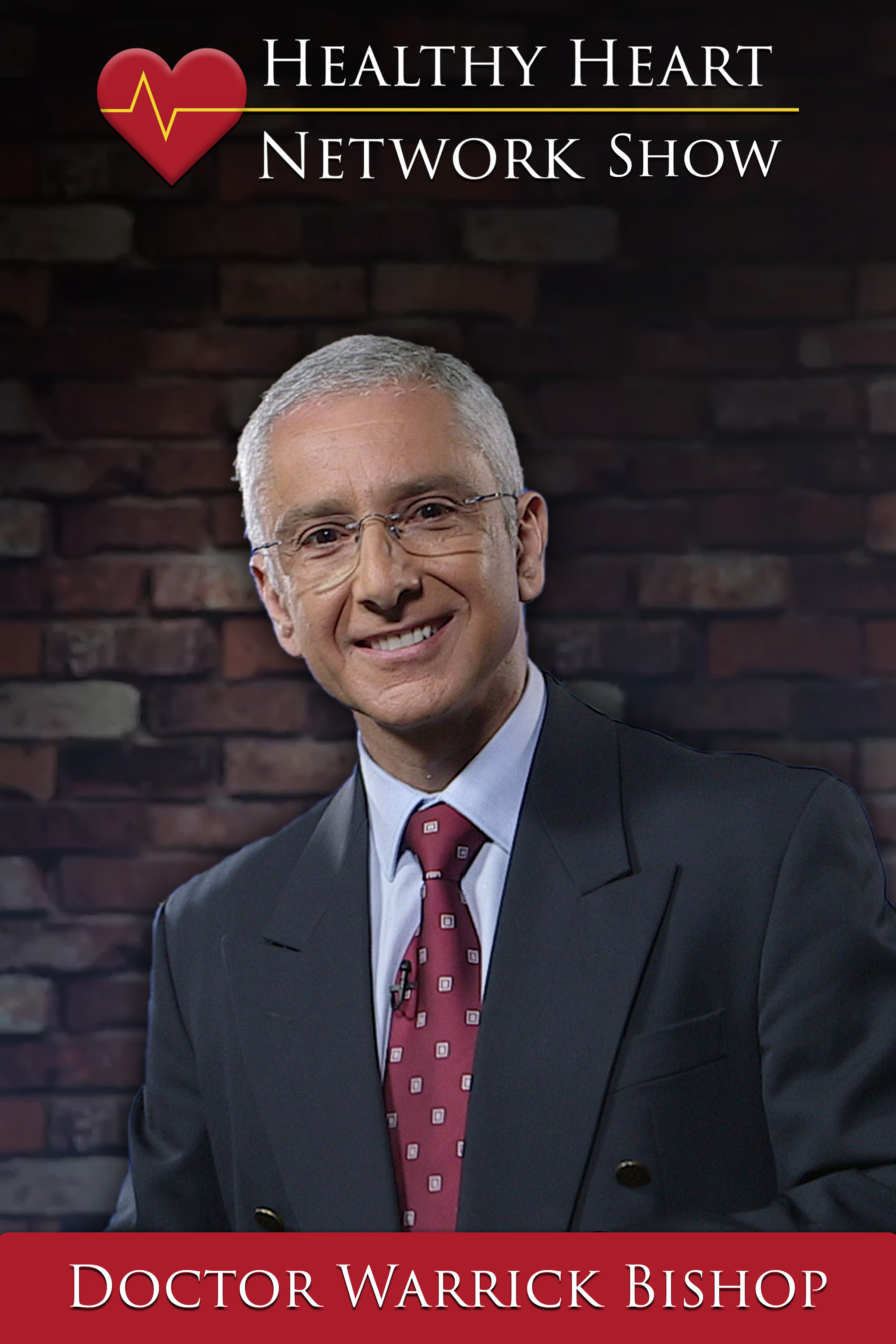
Welcome to Dr. Warrick's podcast channel. Warrick is a practicing cardiologist and author with a passion for improving care by helping patients understand their heart health through education. Warrick believes educated patients get the best health care. Discover and understand the latest approaches and technology in heart care and how this might apply to you or someone you love. Hi, my name is Dr Warrick Bishop and welcome to my podcast and videocast station. Today I have a special guest I'm delighted to invite. Rob Zekin, who's a rehabilitation nurse of many years. Welcome, Rob. Thank you very much for having me. Rob is the president of the New South Wales chapter of the rehabilitation. cardiac rehabilitation organisation and really has a huge depth of knowledge. So look, just a quick question to start, Rob, a little bit of your background and how you got to cardiac rehabilitation. Hi, Kate. Well, I started cardiology nursing in the mid-80s and progressed to working in coronary care. And I... Knew of our cardiac rehab program, which was one of the first programs in Australia and the first one in Australia that promoted exercise stress testing, exercise monitoring and high interval training, intensity training. So I decided that I wanted to do something more than just acute nursing. So I went and became the manager. of that program I spoke about. And in 2004, I inherited two other sites and set up another site at a smaller hospital. So to a large degree, you've seen cardiac rehabilitation's development from its very onset and you've been involved with it. Yes, I have. Yes, since 91. And what I thought was normal. It wasn't normal at all when I, you know, over time found out what other people were doing, other programs were doing and so forth. Look, I'm absolutely struck by how credentialed you are to be sharing, actually. So I feel really privileged to have the chance to pick your brains on this topic, which, yeah, you have all the credibility there, Rob. Look. You've seen so much. In essence, how would you describe what cardiac rehabilitation is and the importance of that for an individual passing through the program? So what I believe cardiac rehabilitation to be is an accelerated recovery, both physically and mental, from a sudden event, a sudden cardiac event. It could be traumatic to them, like having a heart attack. And even the planned bypass grafts itself, it's really hard to describe the essence of that, even though someone else has gone through it and explained it to them. It's all individual, and they tend to be the most problematic in regards to brain fog, issues with deconditioning. pain management, wound management. So it's someone you need to look after more than others. But even though there's no scar involved with, say, a heart attack, you've still got the issues about, you know, what do I do now? Is it safe for me to go back to exercise? What do I need to change to promote my life a bit better so I don't have a second heart attack? Will it affect my children and my family and my friends? Can they catch it? So very much providing educational support, obviously, medical support because you've got a nursing background, but also that physical support as well. So it's a holistic approach, isn't it? Really guiding people through the other side of a cardiac event. And exercise is medicine. Everyone's scared of doing some form of exercise or, you know, how am I going to fit that in time of day? You know, really, if you've got, you know, a pair of good shoes, you can go walking. You know, we don't expect people to go into gyms and leotards and so forth to, you know, to do. If you can walk, yep, if you can walk, that's all you really need to do to get it maintained, you know. a good level of fitness. Look, before we started the recorded interview, we had the chance to speak offline. And one of the things that frustrated you was that some of the minority or, if you like, less represented areas of cardiology weren't making it to rehabilitation. And I understand one of your interests, in fact, is in Aboriginal and Torres Strait Islander. Would you like to... Speak to that for a moment, Rob. Okay. So back in the 2000, around about 2004, we piloted an Aboriginal cardiac rehabilitation service employing an Aboriginal cardiac health worker to try to represent and be the face of that program to encourage Aboriginal people who have heart problems. to come to what they call mainstream cardiac rehab. We had evening classes for them and their family because, you know, really it just doesn't affect that person. If you tell them that they need to go on a certain diet, it's no use telling the guy who's never cooked in his life all about it. You have to invite the partner or the wife or the girlfriend or the boyfriend. to actually come along and also understand or be educated in regards to that part of their problem area that they need to address going forward. It really very much is a village that helps someone recover from these cardiac events. And you're so right. If you don't bring the other family members in or the support people, it can fall completely flat. So is the engagement of friends, family, those resource and support people, is that something that you do routinely through your rehab program? Yes, it's one of the more important components is that, especially if you have a young 35-year-old heart attack person, male or female, you know, there's a family history now just being developed then. So we have to look at, you know, the kids, you know, promoting some healthy lifestyles, surveillance routines in regards to any risk factors they may have as well. Because mum and dad had a heart attack at 35, most likely, you know, if they don't look after themselves and go to their GP and get blood tests or genetic testing, that they may actually have a heart attack at 35 years of age. I'm so heartened to hear that actually, Rob, because one of the things that I see, even with my colleagues who should know better, is that they'll treat someone who's clearly got a premature issue, but not take the next step and say, what about your brothers and sisters and what about your kids? And I think it's our chance to close the loop on cardiac disease and actually be ahead of the game. I think that's so important. I really do. I'm so pleased to hear that focus out of your unit. Do all units look at that holistic, not just the patient, but the siblings and children as well? Are they proactive in that space? Well, I hope so. But, you know, again, certain CAIC rehab programs are under-resourced in regards to their... what's available to them in regards to staffing, availability of what time of day they can actually promote cardiac rehab, is it able to be done after hours when people come home from work or on weekends and so forth. Not that to say my program works on weekends, but we do work Monday to Friday, so we capture quite a large cohort. And we do have some different modalities of cardiac rehab that if they do go to work, we've got a home walking program. You know, we can't provide just education or assessments. We do face-to-face. And we also currently, because of COVID, do some telehealth as well. Yeah, OK. Look, first of all, it's an entire irony to me that there is under-resourcing for trying to identify high-risk individuals. That would be a process that would only pay for itself. So that's terribly disappointing to hear. What I'd like to do, though, is swing around a little bit to something we also spoke about before we started the recording, and that is some of the more unusual things that occur in cardiology and how they sometimes don't get to rehab when perhaps they should. It's an enormously complex topic, but do you want to give us just a few sentences or thoughts around that? Well, one of the things that we did talk about was, well, one of the most underpopulated people that actually come to cardiac rehab is women. And they actually have a certain, you know, even women-specific type of issues such as SCADs or I was going to say sudden cardiac death, but it's not. It's spontaneous coronary artery dissection. And also takotsubo cardiomyopathy, you know, which is what's also called stress cardiomyopathy. So I'll jump in there briefly, Rob, and just explain for people listening. Rob's described two things which we see more commonly in women, and generally middle-aged women, generally. One of those things that Rob described is a thing called sudden coronary artery dissection, and that's where literally the lining of the coronary artery lifts off and tears, and it occurs spontaneously. Very scary. It looks for all the world like a heart attack, but it's a bit different. And the other thing that Rob mentioned was a condition called Takotsubo disease. Now, that's a bit of a mouthful, but it's a particular sort of event driven. change in the way the heart works where literally a big part of the heart the one of the main pumping bits of the heart just stops pumping properly and this is often driven by huge emotional stresses and can be seen most commonly in women a very concerning condition where people present with shortness of breath and so forth and again quite different to the run-of-the-mill stuff that we normally see thanks rob keep on going that's all right so um you know a lot of people are scared even you know Cardiologists are scared on what to do with spontaneous chronic artery dissection in patients. They don't know about exercise components or the psychological component is huge in this population, especially women. They just don't know what they can do. Can I still hold my baby or can I carry my baby because it will cause me to tear again? Yeah, it's a big issue. It's probably more prevalent than we know before, but it's something that we are increasingly being seen in cardiac rehab programs. Look, obviously there are certain conditions that affect women perhaps more frequently than men, but if we were to come back to the sort of run-of-the-mill stenting or bypass grafting, Is the way you deal with women any different to the way you deal with men through those processes, through the recovery of those? There has been evidence that women-only programs have shown to be of some benefit, but I think it's actually treating the person as an individual, you know, undecided about their gender or their sex is actually... providing individual care. What happens to Harry doesn't happen to Harry yet. And because everyone's, again, different. Where they start from is different. Each heart attack's different. You just can't, even each stent, you know, is it a different type of stent where it is? Do they have... pain or post-recoil pain or post-dent pain, all these things that are all individual. And I think if we teach or if we teach or educate the patients individually, I think it's much more better. We just can't go generic and say, I know you don't smoke, but I'm going to tell you about smoking. Especially in a group class, you actually have to do almost a one-on-one or one in a small group with very similar-like issues. That makes perfect sense. And look, my own practice of cardiology is an effort to tailor to the individual what's specific for them. And what you're talking about is that rehabilitation is just not a production line. You don't just pop someone in one end and pop them out the other after a sequence of, if you like, conveyor belt type interventions. What you're doing is you're meeting those people's needs by figuring out where they are and tailoring it appropriately. Look, in the scheme of things, how long does a rehab program normally take an individual to pass through? Again, that's also individual because it could be as short as four weeks, but they're not getting the full, it's usually the patient's preference. But it's usually six to 12 weeks and 12 weeks more for the more deconditioned or heart failure patients. If there was something that was, I guess, one of the biggest challenges, let's stick with, say, stent and bypass patients and we can do them individually because they're a little bit different. Actually, while I'm asking you, do you see the rehabilitation process for stent and bypass very different or how do you reconcile that? Because obviously, one, the people who have bypass grafting have a huge scar. They'll never forget that event. Often my patients may have a stent. and barely skip a beat. What are your thoughts about the rehab process through those different avenues? Well, people who have coronary artery bypasses, as you said, have a scar, and it reminds them every morning about changing behaviour. They're actually the most so-called adherent population. They're least likely to drop out, and the reason why they come to CAKE Rehab is because they don't want to go through that process the discomfort and, you know, how they felt after their bypass. Standing is a different issue. A lot of even patients, but cardiologists, cardiologists say they're fixed. There's no such a fix. It's a temporary, you know, increase of blood flow to a part of the heart. And the patient actually has to take medication to stop the FOTS formation around the metal stem. And they also need to look at changing their lifestyle behaviours, which are detrimental to their heart health. But they tend to be the least likely to stay on programs or go to programs because they've been told they're fixed and I don't really need to do it. I just go back to work and continue on as I am because it's just so easy. It's a day in, day out. And that's just for people who have stents. If you have a heart attack or a STEMI or NSTEMI, more likely they will stay on because, you know, they had a heart attack and it's a bit different to just a stent. And we do go and tell them through cardiac rehab education processes, they're not fixed again. There's no such thing as fixed in cardiology. There's no cure for coronary artery disease, but we can delay it and we can make healthier lifestyle changes. At times, I almost think we should tattoo a scar on the stent patients just to remind them that... We need to continue to care for their heart health. It is a big thing. Look, we've spoken effortlessly for about 15 minutes, so I'm going to start to wrap up. What I'd really like to ask you, though, is of the challenges you see, what would be the main challenges for the people coming through a rehab program that you identify? So what are their main challenges? And then I'll ask you, what are your main frustrations? So one of the main challenges is educating the new cardiologists who really haven't grown up with the, you know, cardiac rehab programs coming through. So sometimes the new ones aren't aware because the new ones are all about imaging or putting in stents, you know, being interventionalists. Or, you know, there's now heart failure specialists, which is good. Would you like to see some cardiologists come? cardiac rehab specialists. They do in America and they do in Canada. We've had a few cardiologists involved in cardiac rehab and we had Alan Goble down in Victoria. He was basically the grandfather of cardiac rehab. He started cardiac rehab in Australia. All involved, but far and few between. I'd like to see more cardiologists be part of cardiac rehab. Of course, if a cardiologist says to go, most likely that patient will go. My biggest frustration is the referral rates. We would love to see automatic referral rates that, you know, they automatically come as part of, you know, like referring a patient to occupational therapy or physiotherapy. Refer them automatically to cardiac rehab because you've had a heart attack or a bypass and they automatically come. If you do that, then the resourcing will come follow that because you can't cope with the number of patients that are coming through. And hopefully the area health service or the state governments will increase their monies into cake rehab. Look, there's no question in my mind that rehabilitation is incredibly important and it really does help. that whole healing process. And as you talked about, it even starts to close the loop in the community about who might be at risk of heart disease into the future. Look, I really appreciate you sharing. There's been such a lot of information there, but I'm actually going to drop something on you that I didn't pre-prepare you for. And if you are unsure, that's cool. But what I wanted to close with, Rob, was Are there any stories of any individuals who really sort of stick in your mind that you'd like to share? Because we all have patients that pop up in our clinical practice and for one reason or another, they just stick in your mind. It's either great results or terrible results or people who have kept in touch. Do you have a particular case or even two you'd like to share? Am I able to name names? Best you don't know names. Okay. Okay. So this person I can talk a bit. Well, I actually did interview him on a webinar with ACRA. And he was a very famous performer in Australia who had a hospital cardiac arrest while performing. And he came to our cardiac rehab program and he... did a home walking program because he was, you know, he didn't want to, because he was well known, he didn't want to come into the unit. But he was able to progress through the program individually as he should and complete the program and have six months and four months follow-up. Now he's gotten to, you know, his life back together. He's actually going back on tour to perform. So, you know, that's something that we... we want for all of our patients is for them to go back to what they love best, to go back, which includes their family, includes their jobs, includes their friends. And that's what we're all about. Rob, my own motto for want of a better term is to see people live as well as possible for as long as possible. And I can tell from speaking with you, that's exactly where your heart sits as well. It's been an absolute pleasure sharing with you. Thank you so much for your time. For those listening, I'm sure you got so much from Rob's depth of knowledge and experience. If you've got any queries or questions, drop us a line at info at drWarrickbishop.com. If you've got any suggestions for future podcasts, let us know. Otherwise, take care. I wish you live as well as possible for as long as possible. Bye for now. You have been listening to another podcast from Dr. Warrick. Visit his website at drWarrickbishop.com for the latest news on heart disease. If you love this podcast, feel free to leave us a review.