**EP327: Statins, Coenzyme Q10, Sams, and Metformin**
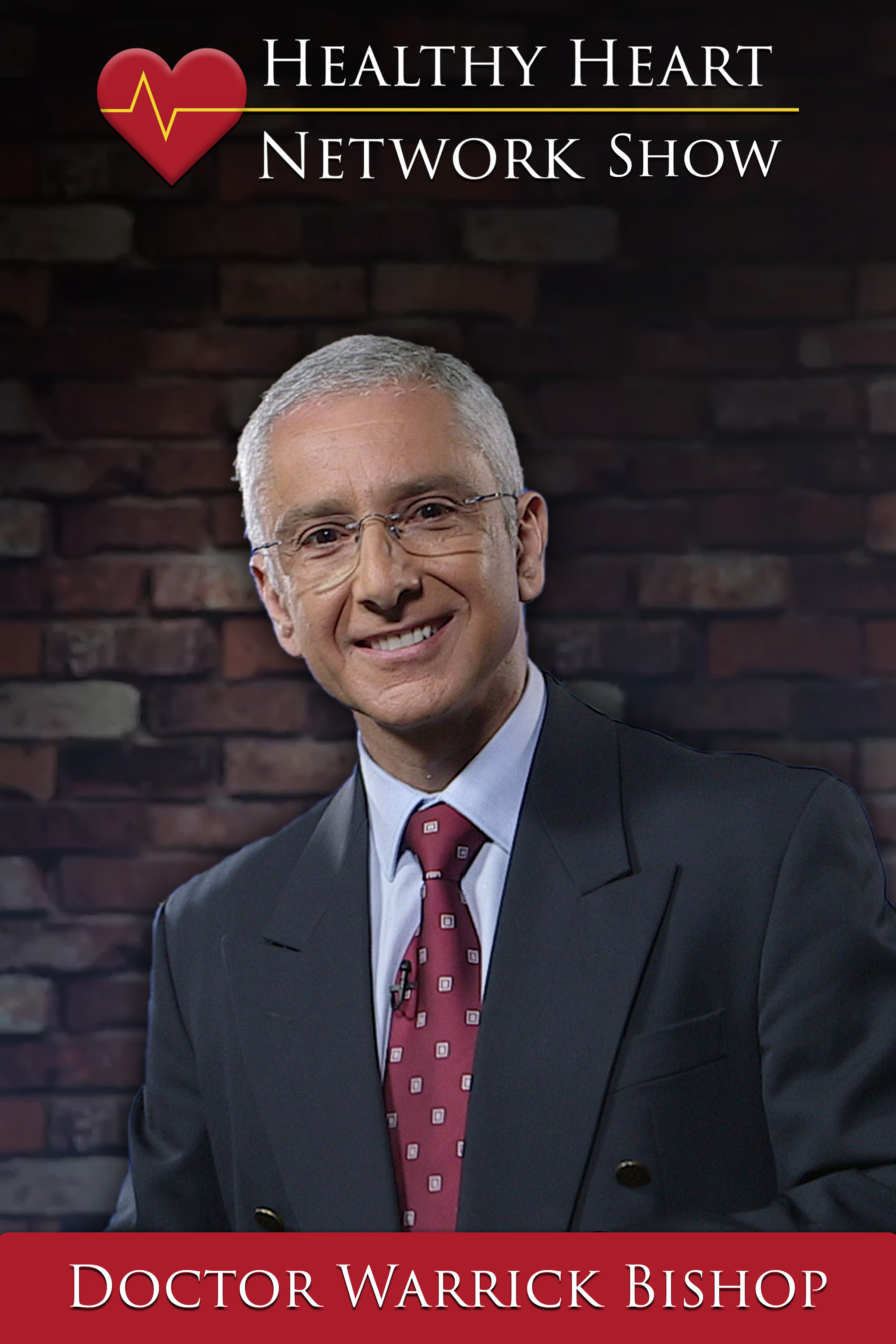
**Dr. Warrick Bishop:** Welcome, my name's Dr. Warrick Bishop. I'm a cardiologist, an author, and a keynote speaker. I'm the CEO of the Healthy Heart Network. I'm all about trying to help people live as well as possible for as long as possible. Heart disease is huge in Australia. Every 20 minutes, someone suffers a heart attack. Most of these could probably have been avoided if only we knew what to do. This podcast is all about helping you understand blood pressure, weight, cholesterol, for better health. If you enjoy this podcast, I would be honoured by a five-star review. You can share it with your family and friends. It may well save someone you love.
**Dr. Warrick Bishop:** Hi, my name's Dr. Warrick Bishop. Welcome to my podcast and videocast station. Today, I'd like to share with you something about coenzyme Q10. Well, what is coenzyme Q10? It's also referred to as ubiquinone. Well, "ubi" stands for ubiquitous, and if you've heard that word before, ubiquitous, you'll know that that means pretty well everywhere. So, for example, if I were to say, when I was in Scandinavia, blonde-haired people appeared to be ubiquitous, I would be saying that blonde-haired people appear to be everywhere.
So, ubiquinone is the other name for coenzyme Q10, a particular compound that is found everywhere throughout the body. The reason is that it's related to the mevalonate pathway and is important for mitochondrial function. Well, why am I talking about it today? The reason I'm talking about it today is we know that statins can have an impact on coenzyme Q10 levels. We know that there's plenty of suggestion from social media, in particular, that muscle aches and pains or statin-associated muscle symptoms may well be related to some of these changes.
I came across an interesting paper the other day, which was titled, "Statins and Stamina: Unveiling the Exercise Factor in Muscle Coenzyme Q10 Levels." I see plenty of patients, and there are plenty of people out there who quite reasonably suggest that lowered coenzyme Q10 levels may be contributory to the statin-affected muscle side effects that patients can report. In fact, that can feed into people having, if you like, a preconceived idea of potential side effects that they may suffer if they were to commence statin therapy. That's pretty important because we call that the nocebo effect, and we've touched on that previously.
In this particular study, the investigators were trying to ascertain the relationship between statins, muscle coenzyme Q10 levels, and symptoms. They were able to take 16 symptomatic statin users, 16 asymptomatic statin users, and 20 non-statin users, all of whom participated in a 12-week exercise program comprising both endurance and resistance training.
Now, they took biopsies from the vastus lateralis. Wondering where that is? Think thigh. Think quadricep. "Quad" for quadra, for bits of muscle. The vastus lateralis is the lateral part of your quadricep. So, these study participants were pretty ballsy, if you ask me. They were open to having their muscles biopsied, which generally is not without a little bit of pain. Anyway, they did muscle biopsies from the vastus lateralis. These were analysed pre that 12-week training program and post, measuring coenzyme Q10 levels in those three groups: 16 symptomatic people on statins, 16 asymptomatic, and 20 non-statin users.
The findings indicated that baseline muscle coenzyme Q10 levels were indeed lower in the statin users compared to the non-statin users. Having said that, these levels were not significantly different between the symptomatic group and the asymptomatic group, suggesting that the coenzyme Q10 levels themselves didn't discern between who may get symptoms and who may not.
Importantly, the study found that exercise training increased muscle coenzyme Q10 levels right across the board, so for all groups. Though this increase was not statistically different between groups, it was statistically significant across the whole cohort. The study concluded that while statin use is associated with lower muscle coenzyme Q10 levels, these levels didn't differ between or help differentiate between the people who reported statin-related side effects or not.
Importantly, they underlined that exercise training, irrespective of statin use, did improve coenzyme Q10 levels and therefore could counteract and decrease the oxidative stress that could occur in muscles associated with statins. They recommended that moderate-intensity exercise is an effective strategy to boost muscle oxidative capacity and coenzyme Q10 levels in statin users.
What I would add to that is it's not a bad idea for all comers because the more you can exercise, the better you will do in the longer term.
Well, that's a little bit on statins and coenzyme Q10 and muscle symptoms. Let me now turn my attention to metformin, which has probably come up previously. I use metformin a fair bit, particularly in patients who are insulin resistant. You may have heard of metformin, used broadly for a long period of time in the context of type 2 diabetes.
I came across an article asking, "Is metformin a drug for all diseases?" Well, where is that coming from? Certainly, for anyone who's in the biohacker space, you may well be aware that some of the people who speak to the biohacking space are, in fact, taking metformin at the moment, hopefully for longevity reasons.
We know it's beneficial for diabetes. It certainly reduces insulin resistance and, because of that, is one of the few diabetic drugs up until recent times to have shown a positive outcome when it comes to treating diabetes or lowering sugar and reducing the risk of cardiovascular events.
Well beyond that, though, there seems to be some tantalising suggestions that it may reduce cancer risk. They are actually in a study recruiting people to look at this in more detail, and it may be that it's simply that interplay with insulin resistance, high insulin levels, and sugar levels, and metformin reducing those toxic products that the body produces—sugar, insulin—and that reduces the risk of cancer in the future. Watch this space because we'll have a reasonable chance of getting more information about it.
Similarly, there's a suggestion that Alzheimer's disease may also be reduced by using metformin in the longer term, suggesting that flattening out not just insulin and glucose, but by really reducing these for people, we're reducing that possibility of the sort of problems that we can see from cell metabolism driven by higher insulin and glucose situations.
We already know that metformin is used for such conditions as obesity, polycystic ovary syndrome, gestational diabetes, and weight gain from antipsychotics, all tied in with increased insulin levels. One of the things that popped out from this paper was that most of these events appear to be limited to people who are overweight and clearly pre-diabetic. This really speaks to the likelihood that the influence of metformin is most likely to be associated with that hyperinsulinemia seen in prediabetes associated with raised sugar levels.
So, I don't think metformin is for all of us at this stage. I think we'll watch this space. I think we'll end up seeing that people who are carrying extra weight and running the risk of prediabetes, not surprisingly, see benefits from this agent through mechanisms across several organ systems.
For now, I'm going to wrap up. I hope you've learned a little bit about coenzyme Q10 and learned a little bit about metformin and that you are now better informed. If you do have any queries or questions, drop us a note at info@drWarrickbishop.online.
For now, I am going to wish you the very best. Thank you once more for tuning in. I hope you live as well as possible for as long as possible. Take care and bye for now.
Join the Healthy Heart Network and become part of our growing community. If you're interested in your heart health and risk of heart attack, then join the Healthy Heart Network for only $5 as a lifetime member. This represents $55 worth of value. We offer help to people understand their present state of heart health, what their current level of risk is, and the positive steps they can take to improve their risk of heart attack in the future. Go to www.healthyheartnetwork.com.au and click the "Join the Family" button.