**EP348: Climate and Environment with Dr. Fiona Foo Part 1**
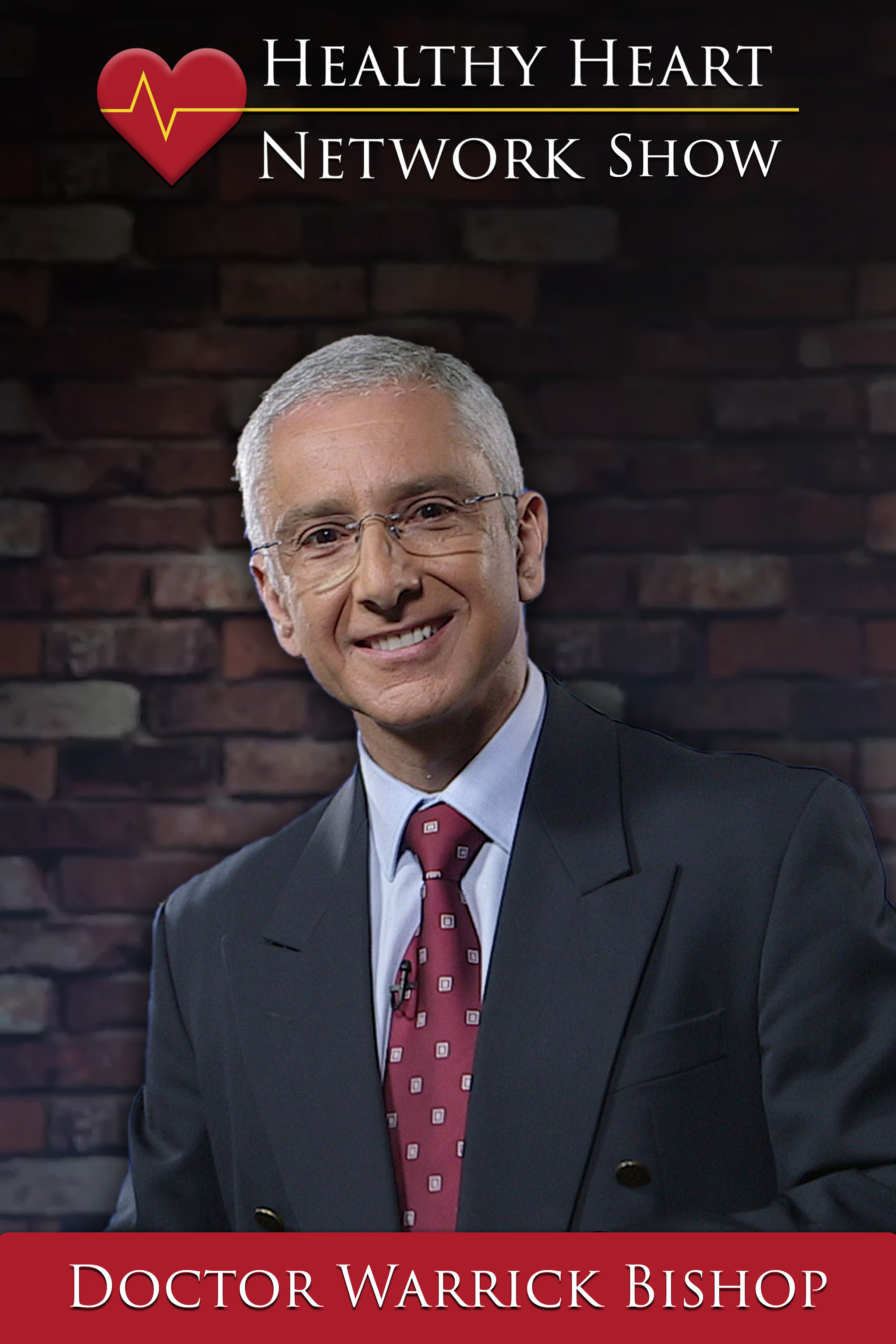
**Dr. Warrick Bishop:** Hi, my name is Dr. Warrick Bishop, and welcome to my podcast and videocast station today. I'm really delighted to have sharing with me Dr. Fiona Foo, a cardiologist from Sydney, who's both a general and interventional cardiologist. That means she puts in stents. She has a particular and specific interest in women and heart disease, sports cardiology, and what we're going to cover a fair bit today is climate change and cardiovascular disease. Fiona, thank you so much for coming along.
**Dr. Fiona Foo:** Thank you for inviting me.
**Dr. Warrick Bishop:** Look, before we kick off, I'm always intrigued around how we all have our own journey to get to where we are and the sort of areas of medicine that we're in. Maybe let's find out a little bit about you, Fiona, just so that those listening have a bit of a sense of where you've come from and why you are where you are.
**Dr. Fiona Foo:** Yeah, so I think I was quite inspired when I did physician training, which is what we have to do before we get into cardiology. I did several rotations, and particularly I enjoyed my cardiology training. I think I just had really aspiring mentors at Concord Hospital. I still know them, and they're the ones who kind of really inspired me to do cardiology. It's one of those specialties where you can actually make a difference and you can actually fix things. I almost became a hematologist, but I thought I just couldn't handle the fact that I couldn't fix it. So, yeah, that's why I do cardiology.
**Dr. Warrick Bishop:** Did you, are you from Sydney originally? Is that where you did your training?
**Dr. Fiona Foo:** Yeah, no, actually I'm from Perth. I came over to Concord to do my physician training, and then I actually went back to Perth to do my cardiology training. The mentors there again inspired me to do interventional training, which I went overseas to Canada—Edmonton in Canada and then Glasgow, Scotland—to do my further interventional cardiology training.
**Dr. Warrick Bishop:** I certainly had a little bit of a similar story. I was very interested in hematology but turned out I was colorblind and I couldn't see the stains. As they showed these things and were sharing, you know, brown or magenta degranular, I couldn't see it. So I was lucky enough to drop into cardiology when we had clock-busting medications hit the scene, where angioplasty balloons hit the scene, where coronary care units were a hive of activity. Just like you, I thought, wow, I love this chance to fix people up. So I can certainly resonate with that.
Look, one of your interests is climate change medicine. For the sake of this, let's call it climate change and environment because we would all agree that not only is the climate changing and we're aware of it, but also our environment is changing. One of the things that we're aware of are the modifiable risk factors for our own health. Would you like to talk to some of the modifiable risk factors to do with climate and our environment that we often don't think about or we should be thinking about more?
**Dr. Fiona Foo:** I mean, I think part of what you're saying is really that I don't think people recognize that the environment is actually a modifiable risk factor, but it is one of the three types of modifiable risk factors. The other two are behavioral and metabolic. The environment, and this includes air pollution, is actually the fourth highest modifiable risk factor for cardiovascular disease worldwide. It's actually higher than smoking. Then there's a non-optimal temperature, so both extreme heat and extreme cold weather will increase cardiovascular disease. Lastly, there are other environmental pollutants—things like toxic metals, but more recently, there's a lot of talk about manufactured chemicals like PFAS and phthalates, and then all the microplastics and nanoplastics. There was a paper published a few months ago that showed how they found microplastics in carotid arteries, and these people had a significantly higher risk of death, stroke, and heart attacks. So I think all these environmental pollutants, as well as climate change increasing air pollution and increasing extreme weather events, are all increasing cardiovascular disease, but they also have a lot of other adverse health outcomes.
**Dr. Warrick Bishop:** It's super important that you're mentioning these and describing these as modifiable risks. I'm imagining that there are people listening to that thinking, "Well, modifiable must mean I can do something about it." This is critical because I think we have to have some ownership. We have to look to governments and leaders as well, but we have to have a role ourselves. I'm going to break this down into what can we do for ourselves and what can we do for our community, our environment, our country. But when it comes to things like air pollution, are there recommendations you give to patients in terms of driving in their car and using air conditioners, recycling the air, getting fresh air, opening windows, or running air conditioners at home? I'll get you to speak to maybe air pollution and what an individual can do for themselves first.
**Dr. Fiona Foo:** So I think, yeah, the first important thing is to realize that air pollution is a significant cause of mortality, not just cardiovascular disease, but mortality worldwide. It's nearly 6.7 million in 2019, but there are even bigger figures—more than 8 million just due to outdoor air pollution alone causes death. More than 50% of this is due to cardiovascular disease, both ischemic heart disease or heart attacks as well as strokes. So that's the most important thing. Air pollution, particularly caused by the burning of fossil fuels—coal, oil, and gas—also includes wood burning, forest fires, and traffic exhaust. All of these types of air pollution, when you breathe them in, they go into your lungs, and if they're very small—something called PM2.5, particulate matter—they go into your bloodstream, and then they can attack every single organ of the body, including the heart. So it's a big risk factor for heart disease, particularly heart attacks.
**Dr. Warrick Bishop:** Before we go too far there, I'll just come back. Those particular particles, are they little bits of unburnt carbon, or are they dust, or are they non-specific remnants?
**Dr. Fiona Foo:** They're very fine particulate matter from the burning of fossil fuels, wood fires, etc. Those are tiny, tiny particles, and they're described by their diameter. PM2.5, so particulate matter 2.5, is 2.5 microns in diameter. It's tiny, tiny, very small. If you compare it to the size of sand, it's a fraction of the size. There's also PM10, which is less than 10 microns, and even smaller than PM2.5 is ultrafine. They're so small that that's how they can get inhaled and get into the bloodstream.
**Dr. Warrick Bishop:** Would they tend to kick off an inflammatory response? Is that what we're seeing?
**Dr. Fiona Foo:** Yes, there are multiple mechanisms by which it can cause both acute as well as chronic effects on every single organ of the body. There are a number of different pathways, like oxidative and inflammatory pathways, that cause all these effects, particularly from the heart point of view.
**Dr. Warrick Bishop:** I'm guessing that if they're in the bloodstream, there's wear and tear within the arteries. These particles can end up in there and be contributory. I'm sort of imagining that if they are in the bloodstream and filtering through the body, do they get caught up in the kidneys? Are kidneys, for example, more likely to be affected by this sort of particulate matter?
**Dr. Fiona Foo:** Every organ is affected. Yeah, every single organ is affected by air pollution. Not just the heart, but also respiratory illnesses in the lungs, heart disease, kidney disease, liver disease, cancers—it can cross the placenta and go into the fetus. So it's a big risk for pregnant women. We're talking about every type of pollution, and particularly, I guess in Australia, we don't think we're exposed to high air pollution. But every time there's a bushfire or back burning, you're exposed to significant amounts of air pollution. I've measured the air quality when we've had back burning and a forest fire near us, and it's extremely high. We were, you know, sometime last year, the third highest in the world in terms of how bad our air quality is. People don't realize that, you know, because it's so invisible. We don't realize that it actually does affect every organ of the body. It's not just acute effects; there's also this chronic effect over years of exposure. Unfortunately, more than 90% of the worldwide population is exposed to annual PM2.5 levels that are above the WHO guidelines. So, yeah, it is a problem, and Australia is not immune to it. We're all exposed to this, and in some places, you'll be exposed more, for example, in cities or when there's lots of traffic.
**Dr. Warrick Bishop:** I think that flagging of bushfires is really valuable because I think there's barely a place in Australia that's not familiar with the sort of season of bushfires we get. There are certainly many places in Australia that are impacted by it. Look, I broke your flow before. You were about to talk about what people can do themselves to look after their health in that space.
**Dr. Fiona Foo:** So I think there are two parts to this. Before you talk about what they can do to protect themselves, one of the things you can do that will help both reduce our air pollution and also help your heart health is actually changing to renewable energy sources. If you change all your electrical needs—like your heating, cooling, and cooking—from burning fossil fuels to solar energy or wind energy, then you're reducing emissions, but you're also improving air pollution. That's one of the biggest things that you can do that will help both the environment and your own health. If you can't put solar panels on your roof, there are other ways you can do it, like changing to an energy provider that provides energy purely from renewables.
The other thing is getting rid of gas. Gas is quite a big problem. It does increase heart disease to an extent, but it's actually asthma and respiratory illness that domestic gas stoves significantly increase. The gas production, particularly in the big places where they produce gas, has been shown to increase deaths, lung problems, asthma, as well as heart disease. So electrifying everything, including gas, will definitely help your health—not just your heart health, but your lung health.
When it comes to reducing your exposure to air pollution, with bushfires, I have an air quality app, so I think it's always good to know when there are alerts for bushfires. You need to stay indoors and not exercise outdoors. If you are outside, I would use a proper N95 mask. Having air filters inside is quite useful as well. You can now get these big air filters that work like dehumidifiers, and they actually filter the air inside. Making sure all the seals of your doors are good is important too, so you don't get that outdoor polluted air inside. Simple measures like that. As you mentioned before about the cars, never have your car air conditioning set to bring in outside air; always have it recirculating.
**Dr. Warrick Bishop:** That brings me to the whole traffic exhaust thing as well. Just before you move on to traffic, you flagged that gas refineries produce emissions that are particularly problematic for people with lung disease. You're obviously talking about a different kind of or range of pollutants or number of pollutants in that situation. Is that correct?
**Dr. Fiona Foo:** I think it's the whole oil and gas production. The whole digging up and that whole big refinery area. There was a massive study that talked about the health issues with oil and gas production in the US. I don't know all the different types of gases. When we talk about air pollution, it's not just PM2.5; there are other air pollutants like ozone, nitrous oxide, and methane. Domestic gas is mainly methane. There are so many different types of air pollution; it's not just PM2.5. PM2.5 is the most studied and definitely the most important pollutant linked to cardiovascular disease. But in terms of gas and traffic exhaust, it's not just PM2.5; it's other gases.
**Dr. Warrick Bishop:** Does that make sense?
**Dr. Fiona Foo:** Yeah, of course. Different origins for these pollutants would dictate that there are different components of those emissions, I guess. It is interesting for people to be aware of that. People with predispositions, like lung disease, would certainly be tuned into that and would want to be making very careful decisions about where they live and where they habitat.
Look, we've run about 15-odd minutes. We could easily cover this for hours, I think. It's a fascinating topic. I've cut you off when you wanted to jump into traffic, but what I'd love to do is invite you back so we could talk about traffic air pollution, which I think everyone has some experience with because we've all sat in traffic. I'd also like to talk about climate change, heat and its impact, cold and its impact, and also mental health as the consequence of climate change on mental health. If it's all right with you, I'd love to invite you back, and we could perhaps do that in a second podcast.
**Dr. Fiona Foo:** Yeah, sorry. Wow, it goes very quickly.
**Dr. Warrick Bishop:** It goes super quickly. Look, I'm so grateful for you making the time. I know you're very busy. I don't know; this is easy. But I was like, "Oh, yeah, it went very quickly." Busy in your practice, busy at home, and busy with climate and protecting people. But I am going to wrap it up, and we'll come back and do a bit more because it is fascinating, and it should be an important topic that all of us are paying attention to.
So for now, Fiona, I'd really like to thank you for sharing today.
**Dr. Fiona Foo:** No worries. Thank you.
**Dr. Warrick Bishop:** Thank you again. For those listening, I really hope you found Fiona's sharing as interesting as I have. This is a fascinating space, and I'm really looking forward to coming back and sharing a bit more. If you have any queries or questions, drop us a note at info@drWarrickbishop.online. For now, I'm going to wish you the very best. As always, I really appreciate you tuning in. I hope you live as well as possible for as long as possible. Take care, and bye for now.