**EP410: Gut Microbiome with Prof Talley Part 1**
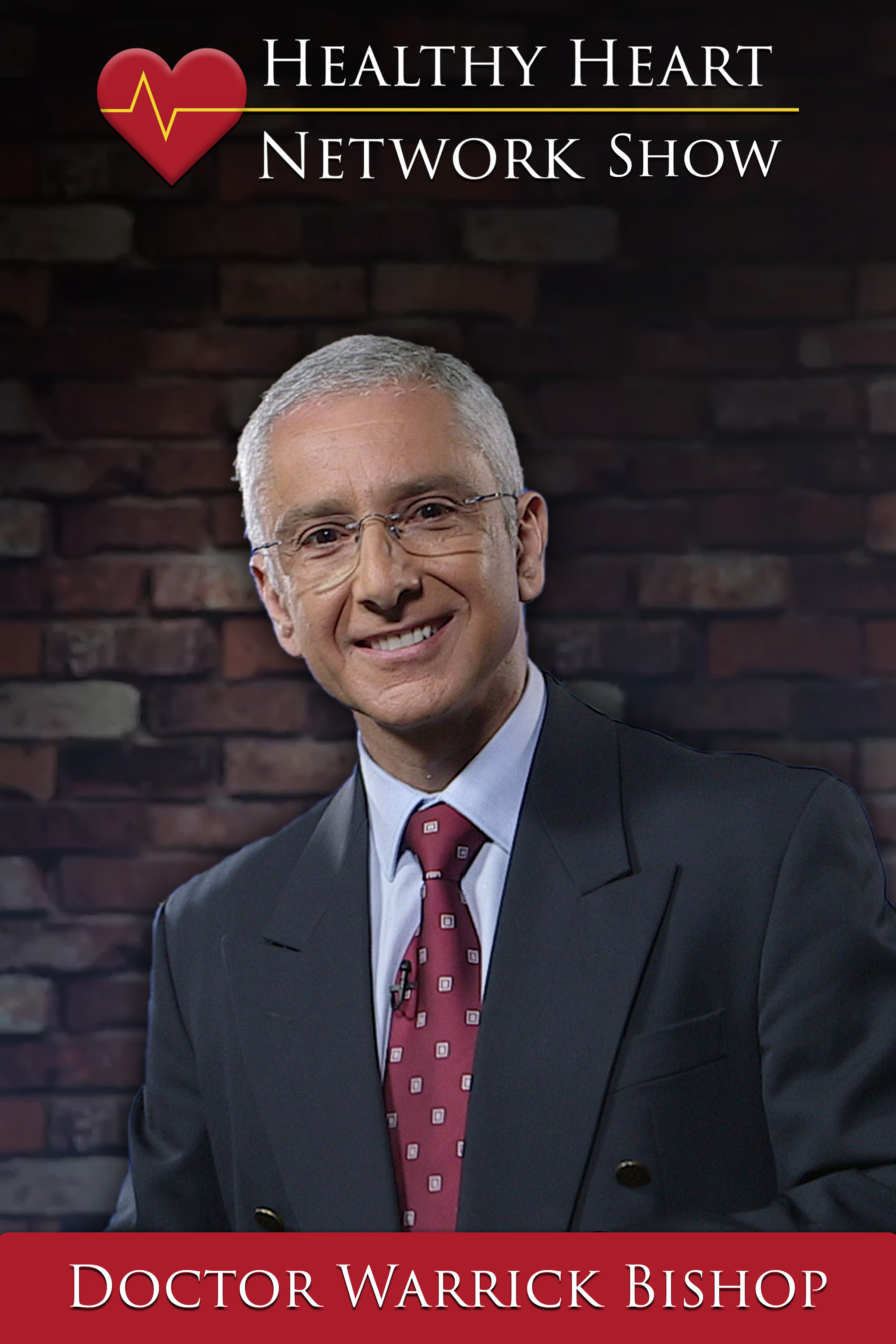
**Dr Warrick Bishop:** Welcome, my name's Dr Warrick Bishop. I'm a cardiologist, an author, and a keynote speaker. I'm CEO of the Healthy Heart Network. I'm all about trying to help people live as well as possible for as long as possible. Heart disease is huge in Australia. Every 20 minutes, someone suffers a heart attack. Most of these could probably have been avoided if only we knew what to do. This podcast is all about helping you understand blood pressure, weight, and cholesterol for better health. If you enjoy this podcast, I would be honored for a five-star review. You can share it with your family and friends. It may well save someone you love.
**Dr. Warrick:** Hi, Dr. Warrick here, and welcome to my podcast and videocast station. I've got a very special guest today. In fact, this special guest was referred by Dr. Fu, who you will have heard on many of my previous podcasts. This particular guest is someone who I've been aware of from my latter years of training: a gastroenterologist, an epidemiologist, a researcher, an educator, and an author. It's through being an author that I'm aware of Professor Nicholas Talley, who's the Distinguished Laureate Professor of Medicine at Newcastle University. Welcome, Nick.
**Prof. Nicholas Talley:** Warrick, pleasure to be here. Thank you for having me on the show.
**Dr. Warrick:** Look, I'm really stoked that you found the time to jump on. For those listening, the reason why I'm aware of Professor Talley is he wrote this fantastic aid to passing clinical exams, which I think just about every medical student and physician training in Australia has used. So, high degree of credibility in the space. But today, we're talking about his area of interest, which is gastroenterology, and particularly the gut microbiome, which is becoming more and more... well, attention is coming to it more and more as we realize it's so important.
Nick, for those listening who don't really know what a gut microbiome is, how would you describe it?
**Prof. Nicholas Talley:** Well, basically, it's all the organisms that live in the gut, all of the genes that are related to these organisms—that's the microbiome. So it's kind of a group of organisms, huge numbers, trillions of organisms that live in our gut. Not just live in the gut; there are organisms also on our skin and all parts of our body, actually. These organisms help keep us healthy, but they can also... we believe lead to disease. So it's kind of a balancing act here. You know, they can be good for us, and they can be bad for us, and we're learning more and more about how they can be good or bad. That's important because all of medicine is potentially impacted by work going on about the microbiome.
So, in very simple terms, how can that microbiome affect your health if it's sort of inside you? How do those bugs get there, and what sort of things can they do to health?
**Prof. Nicholas Talley:** So we get the bugs at birth. There are a few bugs prior to that, but basically, we get our microbiomes—all of our microbiomes—just at or during birth. We get them from our mother and from the environment we're born into. So if we're born by cesarean section, we get a little bit of a different microbiome than if we're born by vaginal normal delivery. So that's one of the factors that alters the microbiome. But we get it in childhood. It matures over two or three years, and then it's more or less there, although diet changes it. Exercise changes it. Medications change it. So the environment shapes these organisms all the time and changes how things occur.
So, the environment affects the bugs, and the bugs affect our health. The bugs release all sorts of chemicals, metabolites, and things that change function. Some of this gets absorbed by the body. And so it goes not just locally in the gut, but actually all around the body. So frankly, the microbiome can affect all sorts of activities, all sorts of functions of the human organism. And of course, not just the human organism; this is across all of nature. There are microbiomes in all living organisms.
There will be a few people who know a little bit about the gut microbiome, and they may have come across the names of some of the groups of organisms, things like Firmicutes and Bacteroidetes. How would you describe those, and how would you sort of...?
**Prof. Nicholas Talley:** They're big groups of bacteria. So we can work out what's there through various techniques, for example, looking at the genes of bacteria, and we can then work out what's actually there. We can pull together the microbial genes and look at what's there. Using different techniques, we can go deeper and deeper. So there are various categories of bacteria that are present. But Firmicutes and Bacteroides are big groups of bacteria which kind of have a... yin-yang effect, I guess, in terms of what these groups of bacteria can do for us or to us.
So you'll hear about lots of complicated terms, but the bottom line is those organisms—there are many, many groups of organisms. That's why it's so complicated. They interact together. They interact with our body. They interact with each other. And so these organisms lead to changes that will impact us, and hopefully for most of us, will keep us healthy. But of course, that's not always the case.
We hear about the gut microbiome and it impacting different aspects of health. One of the things that pops up from time to time, and I'll just mention, is I get a general feed on medical literature. Something came through just the other day about insomnia and the gut microbiome. But one of the ones that comes up fairly regularly is obesity and the gut microbiome. Can you speak to that a little bit? How does that interplay work?
**Prof. Nicholas Talley:** Yeah, so we know that obesity is associated with a different microbiome than if you're not obese. In other words, there's clearly some differences between people who become obese and those who are not obese. And those differences suggest that the diversity of the microbiome gets affected. It's no longer as healthily diverse; it's less diverse, and that seems to be a risk factor for the development of diabetes.
In animal models, you can manipulate the microbiome; you can change the bugs, and actually, that can affect the host, that can affect the organism, and lead to you losing weight. But in humans, it's been much harder to actually do that by just changing the organisms themselves. There have been some experimental works trying to do this, but it really hasn't as yet worked. But theoretically, it may be possible to change the microbiome and impact obesity in the sense that people will lose weight because the microbiome gets changed. Not yet possible, but certainly, people are working on this very actively to see what they can do.
And it kind of makes sense because, again, the bugs release chemicals and other factors that can change appetite because they can get absorbed and actually get to the brain, so change appetite. And also the actual digestion of food, because remember, the organisms interact with the food that we eat, and that leads to the release of all sorts of factors that change potentially health. And that's why it's a very complex system.
Although we've been working very hard on trying to isolate some of the more localized organisms, the key organisms that may impact health in certain diseases, because our view has been it's very hard to deal with millions of organisms, but if you've got a couple of organisms, it's much more straightforward to work out what's actually going on.
Look, as you were talking about the obesity-gut microbiome relationship, and I guess it's the same with other conditions, one of the questions that comes to my mind, and maybe to the people listening in, is that concept of chicken and egg. Is it the obesity that drives the change in the gut microbiome, or is it the other way? Have you been able to get some insight into that?
**Prof. Nicholas Talley:** So it's a very good question because clearly, it is a chicken and egg story really. So if the body changes, the organisms change. If the organisms change, the body can change. So it can go either way. How do you sort that out? Well, one potential approach is to actually do an experiment where you randomize people. One group gets a new set of organisms. You give them organisms through fecal microbial transfer (FMT), and the other group, you don't give them the organisms; actually, you give them something else that's not those organisms. And then you can test in animal models or in humans whether you impact health outcomes.
There is quite a lot of work on what's called FMT as one approach. The other approach is to give drugs that change the organisms in some way or organisms themselves. So you can give what's called a prebiotic; it actually changes the bugs that are already there. Or you can give them a probiotic—actually live organisms in a capsule, which you, of course, can buy at the chemist. Probiotics are all available over the counter. Most of them are useless, by the way; they don't do anything for health. That's not the point. The theory is the same theory. You take these organisms, and they hopefully improve your health.
So FMT's been tried in a number of different diseases. I'll give you two examples. One is irritable bowel syndrome, where FMT's been tried. It's been really interesting. A few studies have shown with certain donors—it depends on whose organisms you get—certain donors yield really good results. IBS symptoms dramatically improve compared to the control group. But in most of the studies, it's failed. FMT hasn't worked. And it hasn't worked, we think, because the donors are not the same donors; of course, they're different donors, and the donors just haven't been helpful. So it depends whose organisms you get. And it's really hard to work out exactly what the right grouping of organisms needs to be. That's where the work's really ongoing at the present time.
I'll give you another example, though, that really excites me—that's Parkinson's disease. There have been a number of fecal microbial transfer studies now. They're all, you know, small; there's only a limited number, but it's really interesting. Again, there's been a negative study or two, which really haven't shown any benefit of this approach in terms of the motor abnormalities that occur in Parkinson's disease, which are, as you know, very disabling. But there are some positive trials too, where FMT hasn't cured Parkinson's, but it significantly improves some of the symptoms of Parkinson's disease.
Now, I think that's really exciting because that says there are bugs in people with Parkinson's that probably drive disease. And that means potentially that is a treatable process. We are studying a prebiotic, actually, something that changes the organisms to see whether that may improve Parkinson's disease. That experimental trial we hope to kick off by the end of this year. So we'll see where that goes. But it's an exciting area—this idea that neurodegenerative diseases, these horrible life-shortening, life-threatening diseases, potentially are treatable or will be treatable with safe therapies in the future. That's the exciting part.
**Dr. Warrick:** I'll jump in there. My stepfather has Parkinson's, so I'm particularly interested in that. When we finish talking, if there is a chance for us to explore that a bit further for selfish reasons to help my dad, I'd love to talk to you about it. It is absolutely fascinating.
One of the things for those listening, just to give you an idea of how much more complicated it even is compared to what Professor Talley is saying, is when you think about the gut microbiome, the organisms that we're testing for, presumably using genetic or DNA testing from rectal samples or stool samples, could be reflective of bugs that are in the oral cavity, in the esophagus, in the stomach, through the small bowel, and right through the colon. So not only do we have these millions and millions of organisms that Nick is talking about, we've got millions of organisms in different locations.
And I wonder, Nick, do those organisms move geographically within the gut and potentially have different impacts as well? So not only being problematic of their own, but problematic by ending up in the wrong place—small bowel bugs ending up in the large bowel, vice versa.
**Prof. Nicholas Talley:** So we believe that's likely to be the case. There's no doubt you swallow your oral microbiome—the things in your mouth—they go down all the time into your gut, for example. And we have found in some of our recent work that there's a streptococcus in the mouth that appears to be present in the small intestine in a disorder called functional dyspepsia. These are people who have very severe indigestion problems, basically feel very uncomfortable after they eat, can't finish normal meals, may have pain in the stomach area, and there's no obvious explanation for it on the routine tests. But they have this micro-inflammation in the small intestine, and they do have these changes in bugs that look as if they're coming from the mouth. We believe most likely because of the type of streptococcus it is.
So that's an example, potentially anyway, of bugs moving from one place where they're completely okay to be, to a place where they're not supposed to be, and that may drive disease. And if that's true—and we have to prove that—then treating this bug, for example, might lead to the resolution of the problem, which of course is the holy grail of all this research in the microbiome: finding the bugs that you can treat to really remove or cure disease.
And I guess I believe in the next 50 years or so, we will have many more disease cures because of the work going on in the microbiome. We're a long way from that yet, but we will over this time.
**Dr. Warrick:** Look, for those listening, you're probably aware I try and run to 10 to 15 minutes for the average podcast. It's been so easy to blow 15 minutes on this particular topic without even a pause. So I'm going to wrap up. But just before I do, we spoke about these neurodegenerative diseases and the potential hope of things like Parkinson's. Just before we wrap up for this episode, and if you have the time, Nick, I would love to invite you back for a part two because this is fascinating, and I know that there'll be people listening who can relate and want to know more.
But when we think about those neurodegenerative conditions, one of the things that I understood, or I think I understood, is that the gut actually has nearly as many neurons as the brain. Is that the case? And is there sort of a gut-brain axis that this interplay is sort of working through?
**Prof. Nicholas Talley:** Yeah, there's no doubt there's a gut-brain axis. In fact, that's why we believe manipulating the gut, changing gut bugs can affect the brain because there's crosstalk. There's crosstalk because the nerves are connected through the big vagus nerve, for example, but also other neural connections. And you're right; there are a huge number of nerve cells in the gut. Only the brain has more. Only the brain has more. And the gut really is a nervous system in and of itself. Its complex nervous system helps us to digest food and to make sure we're comfortable while we're eating. Because, of course, if we don't digest properly, if we don't get our nutrients in, we don't survive. I mean, basically, that's the end.
So absolutely right. And those nerves talk to the brain, and there's lots of evidence that gut diseases may predispose almost to diseases like Parkinson's. For example, the earliest manifestation of Parkinson's disease is constipation in many patients.
**Dr. Warrick:** Wow. Well, look, let's pause it there. Absolutely fascinating. For those listening, I really hope you found this as informative as I have. I'm sure you will have. And for those listening, look, I really do appreciate you taking your valuable time to tune into this podcast. If you enjoy it, please like it and share it because I'd love this information to reach more people.
I genuinely want to thank you today, Nick, for joining us. I really appreciate your time, actually, because I know how busy you are. So thank you so much for sharing.
**Prof. Nicholas Talley:** Thank you.
**Dr. Warrick:** What I'm going to do is record another session with Nick so that we can follow on this amazing gut microbiome journey. Till next time, I hope you all live as well as possible for as long as possible. Take care and bye for now.
Join the Healthy Heart Network and become part of our growing community. If you're interested in your heart health and risk of heart attack, then join the Healthy Heart Network for only $5 as a lifetime member. This represents $55 worth of value. We offer and help people understand their present state of heart health, what their current level of risk is, and the positive steps they can take to improve their risk of heart attack in the future. Go to www.healthyheartnetwork.com.au and click the "Join the Family" button.