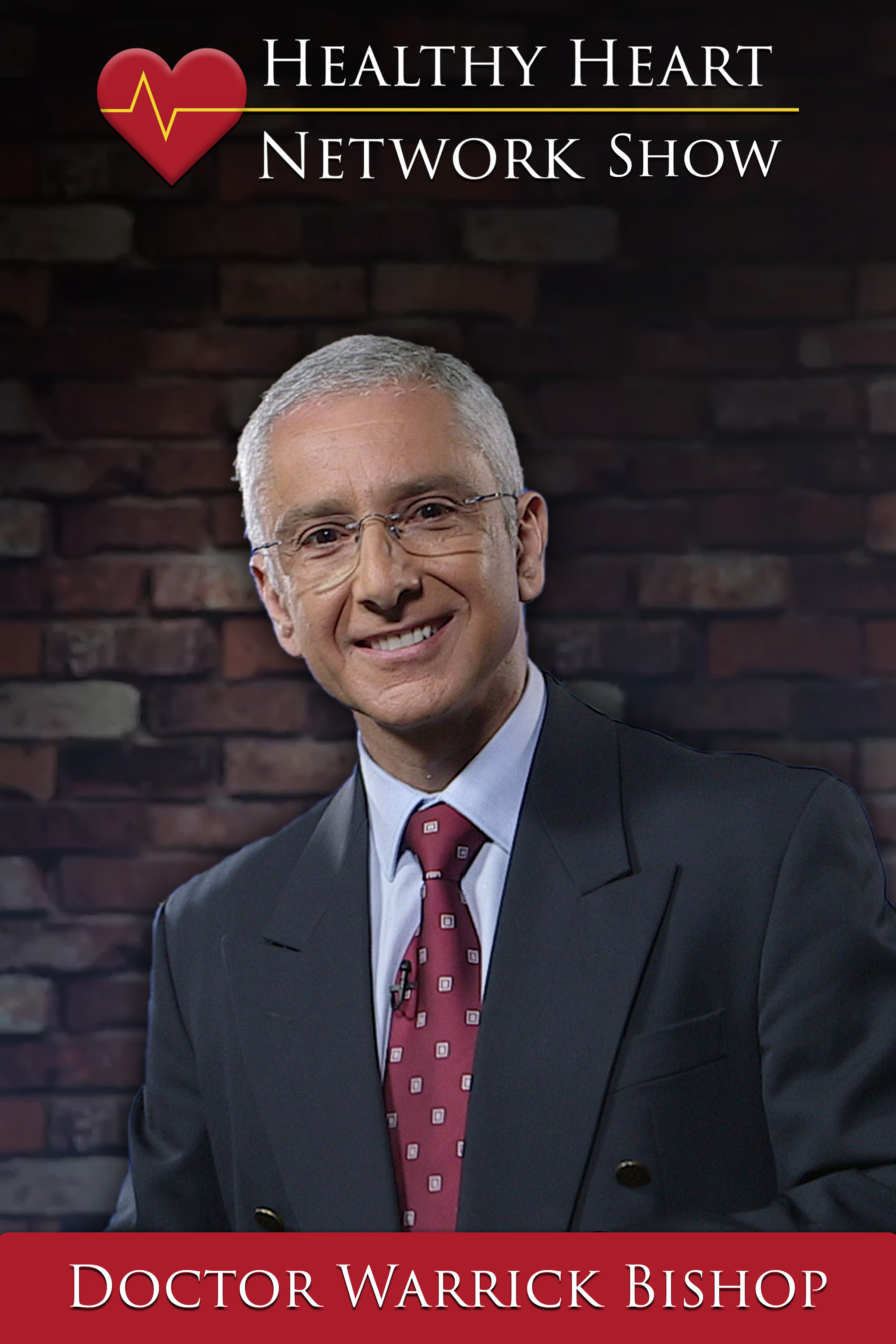
[0:00] Welcome, my name is Dr. Warrick Bishop. I'm a cardiologist, an author and a keynote speaker. I'm CEO of the Healthy Heart Network. I'm all about trying to help people
[0:12] Live as well as possible, for as long as possible.
[0:15] heart disease is huge in Australia.
[0:18] Every 20 minutes someone suffers a heart attack. Most of these could probably have been avoided if only we knew what to do. This podcast is all about helping you understand blood pressure, weight, cholesterol and weight.
[0:32] for better health.
[0:33] If you enjoy this podcast, I would be honored for a five-star review.
[0:37] you can share it with your family and friends. It may well save
[0:41] someone you love.
[0:42] Hi, it's Dr Warrick here and welcome to my podcast and videocast station. Today I've got a repeat guest and it's one I'm sure you'll be delighted to hear from because I'm certainly delighted to have her back. I've got Rosie McAveety. How are you, Rosie? I'm really good, thank you, Warrick. How are you?
[1:01] Excellent. For those who may have missed the first podcast interview with Rosie, go back and listen to it. She's an absolute delight. She is the founder of Ivy League.
[1:14] clinics in Sydney and across Australia. Her background is pharmacy and nursing. And in the last podcast interview, we really talked about
[1:24] IV therapy clinics and what they can offer in terms of vitamins, minerals, chelation,
[1:31] NAD+, and peptides. And there's such a lot there. So I'm not going to drill down on that, but thank you for sharing all that last time, Rosie. Really appreciate that.
[1:41] I really enjoyed our talk. So I'm excited for this one.
[1:44] What I thought I'd do is drill down on something specific for this particular talk, because there'll be people out there listening...
[1:51] who may be in a particular situation. And, Rosie, what I'd like to put to you is that there may be people out there who are actually in or confronting a cancer journey.
[2:05] How would you sort of be able to support those people through the Ivy League clinic or an Ivy clinic?
[2:14] therapy clinic, how could someone be supported through that sort of service?
[2:19] Yeah, absolutely. So we get a lot of patients who come to us either pre-treatment, so radiation or chemo or post. First of all, I like to just precautionarily.
[2:35] everyone by saying that we work very closely with their oncologist or GP. So we do obviously give them a list of what we're able to provide and we make sure that everyone is very comfortable and across the board. So that's the first thing I will definitely disclose because it is the first step we do to making sure that the patient is safe, especially ensuring that their kidney, their
[3:05] I'll jump in there two seconds and I'll underline that because it's so important. Forgive me for jumping in.
[3:12] But this is super critical. You're not looking to offer people a cure or something left field, some wackery. What you're really looking to do is to support that person with the best medical care that they've got in any way you possibly can with the collaboration of the person, the specialist, looking after that individual. I just want to be 100% clear about that so people are not thinking
[3:42] healing, mystic, weird something or other that you guys take it really seriously. Yes, precisely. Exactly what you've said. And sort of what we're trying to, and the way that we like to look at it is there's some really great oncology centers in Germany where they very much integrate integrative and modern medicine. So there's centers where they do
[4:12] in the same centre. And so it's trying to bring that to fruition as best as possible.
[4:16] Australia. So we work very closely with the oncologist to devise a protocol that's going to really help that patient. And I guess what we really see ourselves anecdotally, what I've seen in the last nine years is a lot to do with the quality of the life and also strengthening their immune system, trying to give their body the best shot possible into fighting the cancer whilst they're
[4:46] generally work with an integrative oncologist. The
[4:52] The great one that I know within Australia is Dr. Peter Ng. So he's got some really great protocols that he's able to devise overseas as well. And,
[5:03] I guess what we really see is just how that patient feels, how they feel stronger, how they reduce their acute illnesses. So just simple things like cold and flu where their immune system's shot. So really, really being able to improve their immune system.
[5:25] improve their sleep, their energy levels, all these little things really go into place in the recovery process of it all.
[5:34] So one of the things that I was reading about, be really interested for your
[5:38] input on this is the role of antioxidants during the time that people are going through, things like chemotherapy and radiation therapy, actually. And what came across my desk and what intrigued me was a compound called glutathione. Now, I don't know if people know what glutathione is, but my understanding is it's an antioxidant
[6:05] This certainly seems to be a compound, a molecule that can help people
[6:12] who are going through the sort of stresses on their body,
[6:16] such as...
[6:17] therapy, surgery and radiation. Would you like to speak to that for a moment?
[6:22] Yeah, so glutathione is a very strong, it's essentially the master antioxidant. Really, really important for detoxifying your liver. As you can imagine, when you're putting your body through that many chemicals, which you generally do, chemo, radiation, you really need to be able to detoxify your liver properly. So,
[6:43] Glutathione being the master antioxidant really helps with that process, really helps. And at the end of the day, our whole body is a detoxification center. And being able to help during that time where you are getting pumped with so many chemicals is really important. It's important because it then essentially affects all the organs in your body when you're not detoxifying properly.
[7:13] things that kind of come into the lifestyle, what glutathione essentially does is it really helps assist. And it's one of the most important and vital molecules for your liver to actually function to assist in that detoxification pathway.
[7:28] So someone going through that sort of journey may have glutathione on their list of infusions. What other things might be on their list? Would things like zinc and magnesium or vitamin C also be on there, Rosie?
[7:42] Yeah, yeah. So I would say the most common protocols we've seen from integrative oncologists are definitely zinc magnesium, because as we mentioned in the last podcast, how important magnesium is for over 400 enzyme processes within the body.
[8:12] So you've got glutathione, you've got vitamin C, um,
[8:16] You've got alpha lipoic acid and also vitamin D, which is really important for your immune system.
[8:24] Yeah, okay. So that'll, it sounds like something that you could support
[8:28] someone before they go through a process? Yeah.
[8:32] body is prepared. Sounds like something you could support someone after process to help that body recover. Would that be the way you normally see it? Look, it's totally individualized. However, we do see the most common is before and then after. So we do like to try and strengthen the body as best as possible before chemoradiation and then support their recovery process after.
[9:02] at how we can strengthen the body, the immune system as best as possible during this time.
[9:09] Okay.
[9:10] Do you know if any of the sort of protocols that they're using in Germany that you alluded to, do you know if there's anything specific on those that are sort of interesting or are they covered in the stuff that you've listed there?
[9:24] Yeah, so the one molecule we're trying our best to introduce into Australia is curcumin. Okay. I don't know if anyone knows what curcumin is. It's an extract of turmeric. It is a little bit harder to get approved or to compound because it's a natural extract. So that's quite...
[9:48] heavily used because it is a really strong antioxidant as well, but they do use that predominantly, um,
[9:54] within Germany, within overseas in Europe in the oncology centres. The other interesting one is actual mistletoe.
[10:02] Okay. Wow. So you can inject mistletoe subcutaneously. What they've seen is that really helps support the immune system, especially during oncology. So those are the two that we are definitely looking into that I'm very intrigued, but what they do,
[10:19] usually do in their process is it's really framing, frameworking the protocol as what I mentioned earlier, where they're trying to use modern medicine to kill the cancer cells as best as possible. And then the rest of the time is trying to improve the internal, the cellular health of the person and how to best manage,
[10:40] assist with the recovery. So they generally do it in the same week. So they alternate, you know, chemo radiation, and then they'll do the drip. And they'll alternate the different drips. I'm not completely across the board with the exact protocols, but I do know that they do it very closely within each other. They also obviously eat very healthy. It's almost like a wellness center. Meditation. So it's all about the mental health as well, and how they framework
[11:10] within their mind, which I think spiritually is very important. So it is very different. I hope that
[11:16] Maybe one day we'll be able to open a centre like that here in Australia, but they are very advanced and I'm completely for what they do over there. Well, it certainly sounds like there's opportunity to help people as they're going through their own personal cancer journey. I guess that would start by them coming in and having a consultation with one of your trained medical staff, I'm guessing.
[11:40] Yes, absolutely. And, you know, if we need further information, if we need any more assistance, we'll then reach out to the practitioners that we work with, whether that's an integrative oncologist, whether that's your own personal GP or your own specialist, and we'll work alongside them to devise the best protocol. Yeah.
[12:02] Look, I'm also thinking as you're talking, not only are some of these compounds the
[12:08] like glutathione, vitamin C, so forth, acting as antioxidants and obviously helping the tissues, I imagine that the fluid going in, just of its own, will help people feel a bit better if they've been off their, if they've had some anorexia from chemotherapy or radiation therapy. If they're not eating or drinking as normal, then...
[12:32] not only are they getting some support for their cells, their tissues, but they're also getting some hydration. And we all know how important hydration is just for a sense of well-being. So my guess is...
[12:44] Yeah, I guess some of these people feel better partly through that.
[12:49] Absolutely. Just the hydration itself, as you know, when anyone who goes to emergency, they get hooked up with an IV bag, how great you feel afterwards. So the hydration itself, and generally they can't stomach much, they're not drinking too much water. Being able to provide the hydration definitely almost immediately makes them feel better as well.
[13:11] Yeah. Look, I really appreciate your sharing on that. For those who are listening and...
[13:18] and to a, on their own cancer journey, I hope this has been useful or at least food for thought for you.
[13:25] Rosie, thank you so much for sharing.
[13:27] Thank you so much for having me. I really enjoyed this talk as well and hopefully more talks are in the future.
[13:35] I'm going to have to look at the diary because we have such a lot to talk about. We've got chelation, we've got NAD plus we've got tides.
[13:43] And by the time we do all that, we'll have to start again.
[13:47] Absolute pleasure. For those listening, as always, super appreciate that you've taken the time to listen. And I really hope I've given you something that's valuable and worthwhile. That is my objective. If you have any queries or questions, drop us a no. Love you to follow me on YouTube. Really appreciate that. Share it, actually, because...
[14:06] A lot of people find this information helpful. The more we can get it to, the better. So please feel free to share. And until next time, I hope you live as well as possible.
[14:15] for as long as possible. Take care and bye for now. Join the Healthy Heart Network and become part of our growing community. If you're interested in your heart health and risk of heart attack,
[14:28] then join the Healthy Heart Network for only $5 as a lifetime member. This represents $55 worth of value.
[14:38] We offer
[14:41] and help people understand their present state of heart
[14:45] health
[14:48] what their current level of risk is,
[14:50] and the positive steps they can take
[14:53] to improve their risk of heart attack in the future.
[14:59] go to www.healthyheartnetwork.com
[15:03] dot au and click the join the family button.