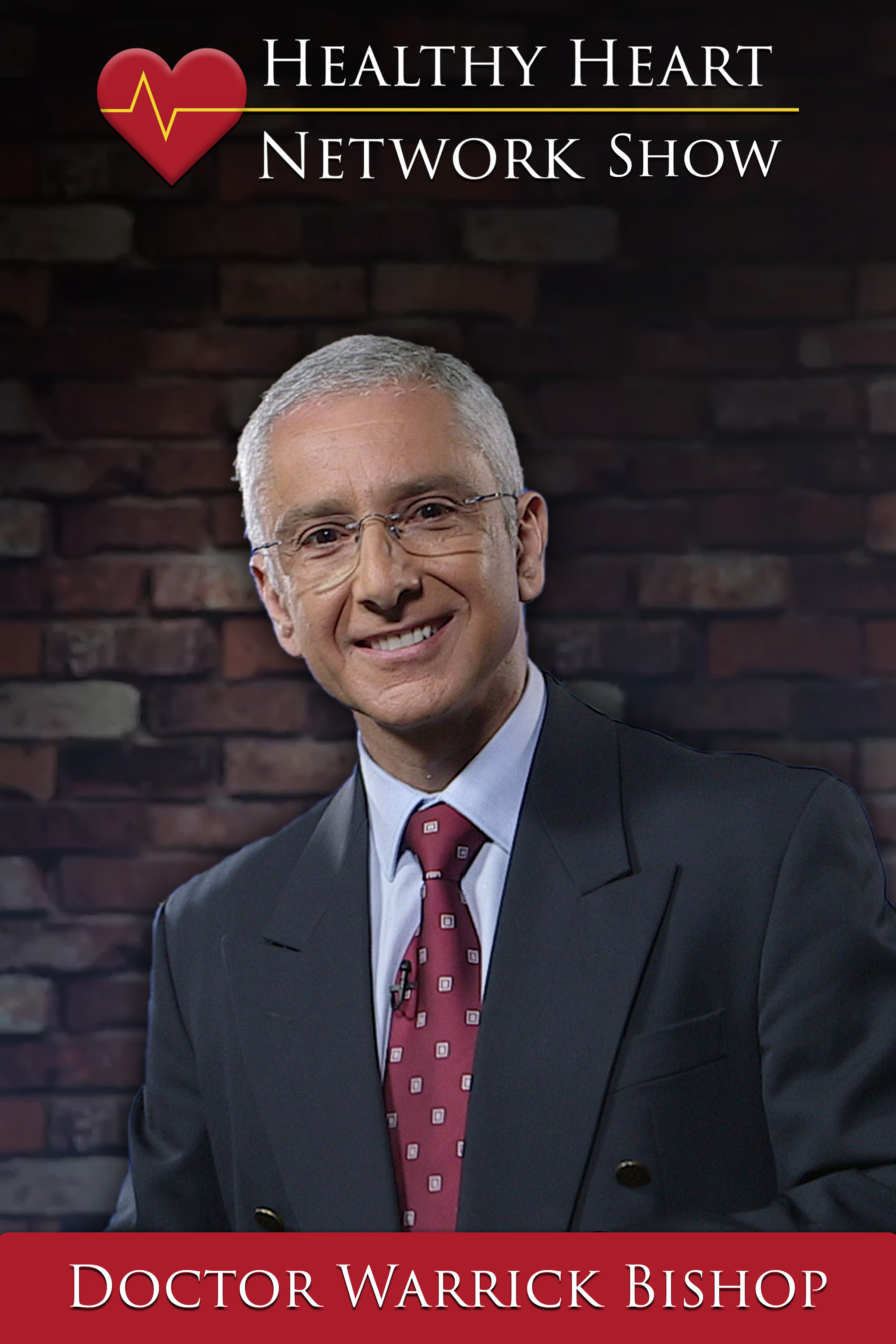
[0:00] Welcome, my name is Dr. Warrick Bishop. I'm a cardiologist, an author and a keynote speaker.
[0:06] I'm just
[0:07] CEO of the Healthy Heart Network. I'm all about trying to help people.
[0:12] Live as well as possible.
[0:13] for as long as possible.
[0:15] Heart disease is huge in Australia.
[0:18] Every 20 minutes someone suffers a heart attack. Most of these could probably have been avoided if only we knew what to do.
[0:26] This podcast is all about helping you understand
[0:29] blood pressure, weight, cholesterol,
[0:32] for better health.
[0:33] If you enjoy this podcast, I would be honoured for a five-star review. You can share it with your family and friends. It may well save you.
[0:41] Someone you love.
[0:43] Hello and welcome to my podcast and videocast station. It's Dr. Warrick here. Today I've got a special guest from the other side of the world, from Denver, Colorado. I've got Danielle Cole. Danielle is joining me today in relation to Fatty 15 or C15, which is a fascinating supplement I've come across and I really want to share. Danielle's background is science, but she's really been in
[1:13] nutrition and how we can get people their best health journey she is head of sales for fatty 15 and it's my absolute pleasure to have her here today hi Danielle
[1:25] Hello, Dr. Ork. Thank you so much for inviting me. I'm happy to be here. Thank you so much for finding the time. Look, um,
[1:34] This is a really, uh, I'm very excited about this particular podcast interview because I've been using, uh, C15 myself for probably nine months to a year. So as my wife, Shel, and, um,
[1:49] I haven't shared it with anyone yet. I haven't done a podcast on it. So I think this is going to be a defining moment.
[1:56] And what I'd like to do is actually just paint the picture for someone who's never heard of C15 before. And as a very quick foundational comment, we think about fatty acids, the things that are in the fat on a piece of chop, the things that are...
[2:13] from dairy, these fats, we often think of them as bad. We think of fats as potentially problematic, although we think about omega-3 oils as good. And we often,
[2:26] Null of fats which have even numbers as well. So we think of 12s, 14s, 16s, 18s and so forth. So this is a different space. We're really talking about a fatty acid.
[2:38] which is altogether different. So I'm going to hand over to you, Danielle. Tell us a little bit about it, and I'll jump in from time to time to just get a bit of clarity. Where did all this start with C15?
[2:49] Great. Thanks so much. So it's a really fun story and one I'm happy to share. And I can kind of start with what it is and then the story of how it was discovered. And so C15 is the nutrient that is in fatty 15. So fatty 15 has one ingredient. The nutrient is C15. That is the shortened scientific name. The long name is pentadecanoic acid. No one has to remember that. But if you
[3:19] fatty acid, it's the third ever to be discovered essential. So it's the third ever essential fatty acid. So we have omega-3s that are essential. Omega-6s are essential. And now C15 is known to be essential. Now humans get plenty of omega-6s in our diet. Some people get enough omega-3s, some people need a supplement. And then C15, we historically in the human diet have gotten this
[3:49] Other mammals also get it from like the heads and skin of some fish. But in our cultures, we mainly don't eat those parts of the fish. And due to farming practices and just the change in our diet, not that many people are getting enough C15. And so, you know, the whole point is every cell in your body, if you think of biology 101 and back to high school and college, you know, every cell in your body has a bilipid layer made up of essential fatty acids.
[4:19] fats and the whole
[4:21] idea is that we have the right ratio of the different fatty acids to optimize cellular health. And when you're in deficient of any of them, you start to have problems. But interestingly, they found that with the deficiency in C15, there's something called cellular fragility syndrome. And one in three people globally are deficient. And actually, they're actually critically deficient
[4:51] sort of falls off a cliff. And then there's sort of this mid to average level where two and three people are. And meanwhile, very few people are in this optimal range. And where we see people in an optimal range are in some blue zones like Sardinia. And so they're getting this very nutrient-dense, high-altitude, grass-fed dairy in high levels. And that's how they're getting it. And so the
[5:21] all of the different fatty acids, but the essential fatty acids are critical or it can impact your health. And so, um,
[5:28] That's what C15 is. It's an essential fatty acid that's making up every cell in your body and something that we all need at every age, from baby to elderly people. We all need it. And it does a few things. So we can clinically claim that it is strengthening cells and reversing cellular aging by fighting off free radical damage.
[5:54] And then there's lots of other things that we can say it does by helping support different pathways, which we can talk about. When you increase cell signaling, so if you think of the job of the omegas, the job is to help your cells be flexible and pliable, but they're very susceptible to lipid proxidation and oxidative stress or going rancid, both in the capsule and interestingly in your cell wall. So while you have to have them, again, you need that balance. The job of C15, it's a saturated fat.
[6:24] a single bond in between the carbons and its job is to strengthen the cell wall and increase cell signaling. So they're different jobs and you have to have both.
[6:34] Now the story of how, sorry, go ahead. Yeah. I can jump in quickly, Danielle. Just as people are listening, that concept of the lipid bilayer is really fascinating, actually. And we're talking about two sets of fatty acids facing each other and creating not just the structure that the cell survives in, but this is also the structure that cells communicate.
[6:59] through and with each other via. And that means that not only...
[7:06] fat acids like C15 or the omegas important in that stability and dealing with free radicals. And in fact, cholesterol is in fact in every cell membrane in every animal. And that came about 3 billion years ago as a direct consequence of oxygen free radical impact on cells. But
[7:31] They also manipulate and therefore influence things like iron transfer, flow in and flow out, and communication. So it's not just the integrity or strength of the cell, it's how it works as well. So it's a really important thing.
[7:48] dynamic in there, don't you? Yeah, that's exactly right. And so interestingly, when you start to ask, well, what does this help support? What does C15 support? Well, you know, on a basic level, cellular strength, but as to your point, the cell communication then impacts so many things. So for example, C15 helps activate AMPK and inhibit mTOR. That's what berberine and metformin do.
[8:18] NM Tor. Just for those listening who haven't heard of those before...
[8:23] Yeah.
[8:24] So, yeah, sure. Well, it has to do with insulin sensitivity. So at a very basic level, it's making, it is the way that your cells receive and process insulin. And it's known as one of the longevity pathways to be able to do that.
[8:54] You're helping the cells behave appropriately versus becoming resistant to insulin, which, of course, is cellular energy. It's energy for our bodies, but it's also energy for our cells.
[9:08] Yeah, they're certainly central to that energy pathway. Before we go too far down the science and the benefits that C15 have, I would love to wind back to where it was discovered because the fun story. It's a really fun story. So actually, this is what most people remember about Fatty 15 and how it sticks in the brain.
[9:38] is a veterinary epidemiologist who was working with the U.S. Navy Dolphin Translational Medicine Program. So she was helping the health of the dolphins. People always want to know what she was doing, studying the dolphins. You know, she was helping their aging dolphin population. And the dolphins started having human-like problems. They started having increased cholesterol, insulin resistance, Alzheimer's-like symptoms. And they wondered what was going on. And not
[10:08] All dolphins had the same problem. About one in three were having the problem. And so they did a bunch of testing called metabolomics testing, testing the fats, expecting to see a problem with omega-3s because, of course, they eat a fish diet. And so they started studying it, and it was not omega-3 related. It turned out it was C15. So they started supplementing. A C15 deficiency was causing the problems.
[10:38] very quickly. And they started doing this research
[10:41] in the early 2000s, and she now has over 100 peer-reviewed publications that have translated into human medicine as well. She has nearing 100 patents, just on and on on the interesting discoveries of this. A new type of cell death was discovered. To your point, the iron transferine, there's a type of cell death that was discovered called ferroptosis. And if you think of ferritin
[11:11] For optosis, it was an iron overload in the cell, breaking down
[11:15] prematurely breaking down red blood cells and causing major health problems. And so, and there's over 10,000 publications that have been done on ferroptosis. So there's really, really lots of science behind this. But it was in helping the U.S. dolphins and the Navy Dolphin Program, and they are still supplemented with C15 to this day. And just for reference, we call this the longevity nutrient.
[11:45] have any nutrient based on some of these stories, but the dolphins, they're
[11:50] who normally live to be 20 in the wild. And these technically are wild dolphins who swim in open ocean every day, but choose to come back every day because they're treated nicely and they're fed well.
[12:01] Two of them turned 60 this year, and there's several in their 40s and 50s. And so while that's not the same as us saying, hey, this is going to change the lifespan completely of humans, they are large-brained, long-lived mammals.
[12:20] mouse model studies, which a lot of nutritionists studied in. Wow. It is a fascinating story. And
[12:27] The, as you say, large mammals, large brain, fascinating. I mean, you can see the interest in the crossover of that science. So what an interesting space to be in. I love it. Yeah, that's great. The...
[12:45] For those listening, what might be the sort of
[12:49] questions that someone should be asking themselves if they were thinking that supplementation with C15 would be appropriate or based on what you were saying before, Daniel, if one in three people are critically deplete, then is it almost a situation where people should get checked? Can you measure for it? And what sort of decisions would people make around supplementing with C15?
[13:15] Yeah, really good questions. So first of all, we did get certified as GRASS or generally regarded as safe. This is a food or dietary ingredient. And so there is no downside with having more C15 in your diet. Now, what we can't say is, hey, if you're deficient and you just drink a bunch of full fat milk, it'll fix it. Interestingly, you may be able to get out of a deficiency of C15,
[13:45] C14 and C16 with dairy, we can't make some of the same health benefit claims like supporting metabolic health or supporting liver health or supporting immune health. You know, we can claim that with C15, but we can't tell you, hey, if you eat more butter, eat more ice cream, eat more dairy, that you'll be able to have the same clinical benefits. Now, we do recommend this for all ages, interestingly, and we're just now releasing
[14:15] because if moms are deficient, all mammals are getting this first from their mother's milk. And so if the mom is deficient or dairy-free, then the baby starts out deficient as well. And so interestingly, babies all the way through life should be getting C15. And we do recommend for children to make sure that they're getting, if they can tolerate it,
[14:45] as possible. And again, grass-fed has more. Corn-fed has less than half of the C15 as grass-fed. So that's interesting too. And who else might be interested in doing this? Well, number one, if you're dairy-free, there's a really great chance that you're in that critically deficient level. And you can get tested for C15 levels. Right now, Genova is a testing model that has
[15:15] I'm working with Biotech, which is global and I think actually based in Australia, to add the testing to their platform. They want to add an at-home fingerprint test that would test omegas and C15 levels easily. And so hopefully that will be available by June or so.
[15:32] And that would be nice. But what's interesting is I don't know that...
[15:36] People aren't that motivated, I find, by knowing their C15 levels necessarily. But what is motivating are other...
[15:44] regularly, routinely tested for blood markers. And so if you know that you have elevated cholesterol, if you have elevated liver enzymes, if your RDW is off red blood distribution width, or, you know, you have high inflammation, high HSCRP, high inflammatory markers, there are some other telltale signs that you're not in optimal health. And while you're going to want to look at your
[16:14] know is that your cells are not behaving optimally and you can add in C15 that's been able to show support for all those different pathways.
[16:24] Are there any concerns with mixing C15 with any other dietary supplements or even medications? Is there any crossover that people need to be aware of? We have not seen any contraindications or reasons to not take it. It doesn't seem to impact any other foods at the same time. The only time, so we see that it's 100% bioavailable.
[16:54] And when you get that tested, you can see in Genova, it'll have it in there. And a lot of people are below 0.2 is that critically deficient place. And 0.2 to 0.4 is kind of this average level. And then 0.4 to 0.6 is optimal. And if you take a 100-milligram supplement, reliably, all of it actually is absorbed. And it raises in your red blood cells by 0.1. So if you're at 0.2 and you want to get to 0.3, you'd take 100 milligrams.
[17:24] when you want to get to 0.4, you'd take 200 milligrams. And so you can test for dosing and kind of understand that way. But in general, it's generally regarded as safe up to 600 milligrams is what we're certified for. But actually, there's been no dose at which they've seen any problems happening. I just think that at some point, it's more and more helpful. And so, yeah, you're going to want to evaluate your diet and understand, okay,
[17:54] someone who's who's eating the skin and fish skin and head and a lot of fish am i eating a lot of dairy and by a lot it's really about two cups of full fat grass-fed milk per day to get enough um
[18:08] Yeah, and if you're not doing that, then you likely could use more. Okay. Look, we talked about the role of C15 in improving cell membrane function and the obvious knock-on effects with that, plus the role that it may have in inflammation. But are you aware of any, and we're probably at a very preliminary stage, so I'm not expecting this, but I'm happy for you to talk to us.
[18:34] Are you aware of any indications in, say, the cardiovascular space, the dementia space, or even the cancer space, where C15, because you alluded to a longevity for some of these dolphins in particular.
[18:51] cardiovascular, diabetes, cancer, dementia, any of those spaces where you're starting to get a bit of data that really supports the role of C15?
[19:03] We really are. So in...
[19:05] Every area that you mentioned, there is some science, and in some areas there's more. So for diabetes, for example, Stephanie was just able to publish a paper that showed 100-milligram C15 increase in the
[19:21] in the diet daily led to a 30, 32% decrease in a chance of getting type two diabetes. Um, so that's just one capsule a day of C15. Um, yep. Led to a major, uh, risk, risk reduction of diabetes. Um, we also, as mentioned, um,
[19:43] can show that we're activating that AMPK pathway and inhibiting mTOR. That's in that blood sugar control space. And we work with providers all the time, and the providers have reported back anecdotal evidence that we need to explore further in human studies. But we can see that it is really able to, and these providers are reporting that it's helping lower HbA1c, helping lower LDL.
[20:13] So we are careful on claims. Of course, supplementation, we need to be careful on the claim. But it is supporting those pathways, and it is a very safe way to start addressing metabolic health. Also, a major place this is playing a role is liver health, interestingly, nutrition.
[20:33] liver health is if you have non-alcoholic fatty liver disease, this is something you really should explore. And what I can say for cancer and for cognitive health, there's a lot of cellular data going on that we can see. They haven't been done in human studies. Again, it's preliminary, but the preliminary studies look amazing. So what we do know is one of the pathways is the
[21:03] And it has to do with...
[21:05] cognition and brain. And so we know that we're able to reduce JEC-STAT and play in that pathway. We're also in the alpha-delta-P-PARS pathway. So there's some different pathways that have to do with cognition and cancer pathways. And
[21:24] it
[21:24] At a very basic level, when you think of cancer, keeping cells stronger, which we claim to do, we're making the cell membrane stronger and not having your cells mutate is a good thing. And yeah, so we can say that. And then also for more information on exactly where we're at with that, you can reference two places. One, the longevity nutrient is a bestselling book and it's available everywhere.
[21:54] And it's available in Australia and it's available in audiobook. And that does have chapters on cognitive health and cancer. And after reading that book, you know, I was taking one a day for myself when I started the company. I was compelled by the science. I was excited. I had a good job. I came here because I was so compelled by the science and story. And it's exciting.
[22:24] So it's like having vitamin C for scurvy or vitamin D for rickets. And here we have a solution for cellular fragility syndrome.
[22:34] And after reading the book, though, I now take three a day. Because I'm dairy-free. I don't eat any dairy. I don't tolerate it well. So then I have my daughter on it, my dogs on it, my husband on it, my parents are on it. So it just changed everything after I read the whole book and understood the science. And know that the last 75 pages are references. So it's an extremely well-researched book. It reads nicely. It's easy to read. But it is available there.
[23:04] reading a book, but you want to check out the science, discoverc15.com is our science site, and we have everything referenced there as well.
[23:13] Danielle, I really appreciate that you've spoken to that science. It's great to know that there are those papers there and that Stephanie Van Watson has been recognised with that work. But I'm guessing you've probably, and this is coming from a medical perspective and having patients and different stories, there must be a couple of stories of people that you've heard.
[23:34] who have taken C15 and have had great results. Do you want to share one or two stories quickly, and then we better wrap up. Sure. Yeah, that sounds great. You know, I was actually just at a healthcare provider conference and saw someone who's fairly well-known in this space in the U.S., Monique Klass, and I said, Hey, Monique, we'd love to partner with you. I'd love to have you speak with us. And she said, Oh, great. My husband just started taking FATI-15,
[24:04] and his LDL dropped. And I now forget if it was 52 or 62 points, but his LDL dropped. And he had not made other changes. So that was his change that he had made. And he attributed it to helping his health with that. And so that was really fun to hear. And we keep hearing stories like that from different providers. And they're recommending it for those different reasons.
[24:29] There's other... Go ahead. Sorry for jumping in, Danielle.
[24:34] might be helpful for was mood and mood stabilization and mood improvement have you seen much in that space?
[24:42] We really have. And so one of the near-term benefits, one of the fastest things you'll feel, you know, this is cellular health. And so we don't often sample it because if you took it today, if you take a high enough dose, I actually do feel with 300 milligrams, an increase in energy because it helps with mitochondrial production. But the next thing that you would feel is deep sleep and positive mood. And that's after about two weeks of usage. So it's not like you
[25:12] two weeks it's doing that. So that's actually helping to increase dopamine and inhibit MAOB. And both of those things can help with both mood and deep sleep. And again, anecdotally, we don't have a lot of human studies on this because, again, it's new and emerging, but we will continue doing research. Stephanie is publishing about a paper a week, which is incredible. And we have global teams doing this as well. But she... So we've had providers report back that their...
[25:41] They're getting amazing results with ADHD children and also with mood and anxiety for kids and adults.
[25:50] Wow.
[25:52] uh well danielle as much as uh it disappoints me we do have to wrap up i try and run about 20 odd minutes and i think we've easily blasted through that it's been an absolute delight sharing with you and thanks so much for bringing such a lot of information uh for those listening i've actually partnered up with c15 so if you went to partners.fatty15.com
[26:14] backslash Warrickbishop you can access a discount uh courtesy of c15 that discount if you take advantage of it c15 also give me a discount so we're both winning out of that if you're interested um other than that uh daniel thank you so much for joining me today
[26:35] Thank you. I really appreciate you having me. I love getting the message out to the world that C15 is important. It's needed for all animals and people. And our goal is to not only get it in a supplement, it's to get it back in the dietary form as well. We're hoping to help everyone be aware and get more C15 in their diet. Yeah. No, your passion comes through and it's a great story. Thank you so much again for sharing. For those listening, if you've got any queries or questions,
[27:05] dot online and as always really do appreciate you taking the time to listen i know your time is valuable so i really hope you found this valuable i certainly have till next time i hope you live as well as possible for as long as possible take care and bye for now
[27:25] Join the Healthy Heart Network and become part of our growing community. If you're interested in your heart health and risk of heart attack, then join the Healthy Heart Network.
[27:39] for only $5 as a lifetime member. This represents $55 worth of value.
[27:46] We offer
[27:48] and help people understand their present state of heart
[27:53] health
[27:55] what their current level of risk is,
[27:57] and the positive steps they can take
[28:01] to improve their risk of heart attack in the future.
[28:06] go to www.healthyheartnetwork.com.
[28:11] and click the Join the Family button.