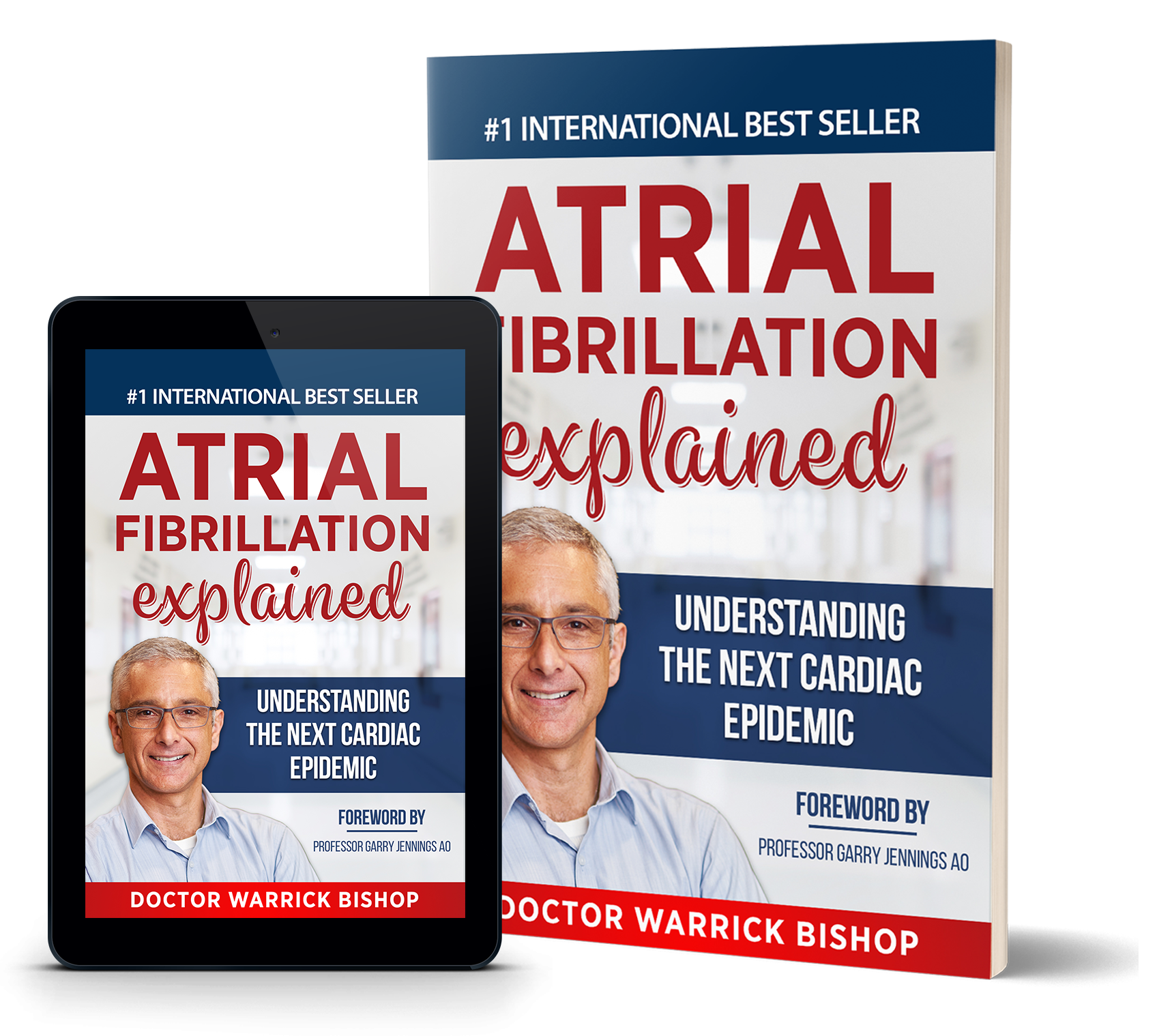
Welcome to Dr. Warrick's podcast channel. Warrick is a practicing cardiologist and author with a passion for improving care by helping patients understand their heart health through education. Warrick believes educated patients get the best health care. Discover and understand the latest approaches and technology in heart care and how this might apply to you or someone you love. Well, all this week is Dementia Awareness Week. What you might not be aware of is that it is also Atrial Fibrillation Awareness Week 2, and with some details is cardiologist Dr. Warrick Bishop. It's good to be chatting with you, Warrick. Yeah, thanks, Tim, and it's good to be invited to share with you about atrial fibrillation. Okay, so for those of us who don't know what this is, and myself included, what exactly is it, and why do we need to bring awareness to it this week? Atrial fibrillation is an irregular beat of the heart. And when we think about the heart's function, atrial fibrillation is to do with the electrical system of the heart. And in the normal functioning heart, there is contraction of the top chambers of the heart, if you like, which fill the bottom chambers of the heart. And in atrial fibrillation, the coordinated contraction, the normal electrical discharge, of the top chambers of the heart, which are called the atria, the pre-pumping chambers, that coordinated contraction is lost, and those chambers just twitch or wobble or jiggle around, and the word we use is fibrillate. So people might feel it as a palpitation. The reason why it's important, Tim, is because it can cause problems. It can certainly cause symptoms, and people can be aware of it, shortness of breath or lightheadedness. or just the awareness of the fluttering in their chest, but it can also be linked to stroke, and that's a real concern. How common is this in Aussies? Do we have any sort of figures? Look, Tim, this is a common condition, and we know that about 1% of the entire population can be affected by this, so that's a lot of people, but more importantly, as people get older... they're more and more susceptible to it. So if you take a group of people over 80 years of age in our community, 15% or more will have this condition. And the really scary thing, Tim, is that a good percentage, somewhere between 3% and 5%, may not even be aware. Is this curable or is it just treatable? And if so, then what are the treatments that can be applied? Yeah, look, unfortunately, Unfortunately, to a large degree, this is a condition that we have to control and manage. One of the most common associations is people ageing. So to a large degree, Tim, our efforts are to manage it at a given moment in time. And there are two things we try to manage. One is the symptoms that can be caused by it, but the other thing we're looking to treat is the risk of stroke. And so we talk about... and use blood-thinning medications regularly for this condition. What are some simple things then, or are there simple things that we can do to avoid or lessen the risk of developing this? Tim, the drivers for atrial fibrillation are many. In fact, I've written a book fairly recently called Atrial Fibrillation Explained where I touch on the many things that can end up with atrial fibrillation as the final common pathway. There can be, in a small number of people, a familial predisposition or a genetic link. But the most significant driver is age. Then things like blood pressure, which means controlling your blood pressure over many years, is really, really important. Excess alcohol has been linked very closely. So is obesity and poor sleep. So in many ways, looking after yourself, looking after your blood pressure, getting good sleep and keeping your weight under control, are great starting points. The thing you can't control is getting older. Sure. Now, Warrick, if people listening have concerns or they'd like more information about the condition, obviously you mentioned you've got the book there, but are there other things you should advise them to do or point them in the direction of, perhaps? Look, as always, Tim, I'm a strong advocate for patients touching base with their local doctor on a regular basis for a general check, particularly for patients 65 years or older. and this is within the Australian guidelines for atrial fibrillation, opportunistic testing is recommended. So getting GPs to check the blood pressure and pulse on regular visits and also check other things like cholesterol and heart risk at the same time, of course. Sure. We've been chatting about atrial fibrillation because it is Atrial Fibrillation Awareness Week. And my special guest has been cardiologist Dr. Warrick Bishop. You can find more details about him and this at his website, drWarrickbishop.com. Warrick, as always, a pleasure. Thank you for your time and your input. And we'll talk to you again real soon. You have been listening to another podcast from Dr. Warrick. Visit his website at drWarrickbishop.com for the latest news on heart disease. If you love this podcast, feel free to leave us a review.