**EP312: QLD Lipid Meeting October 2023**
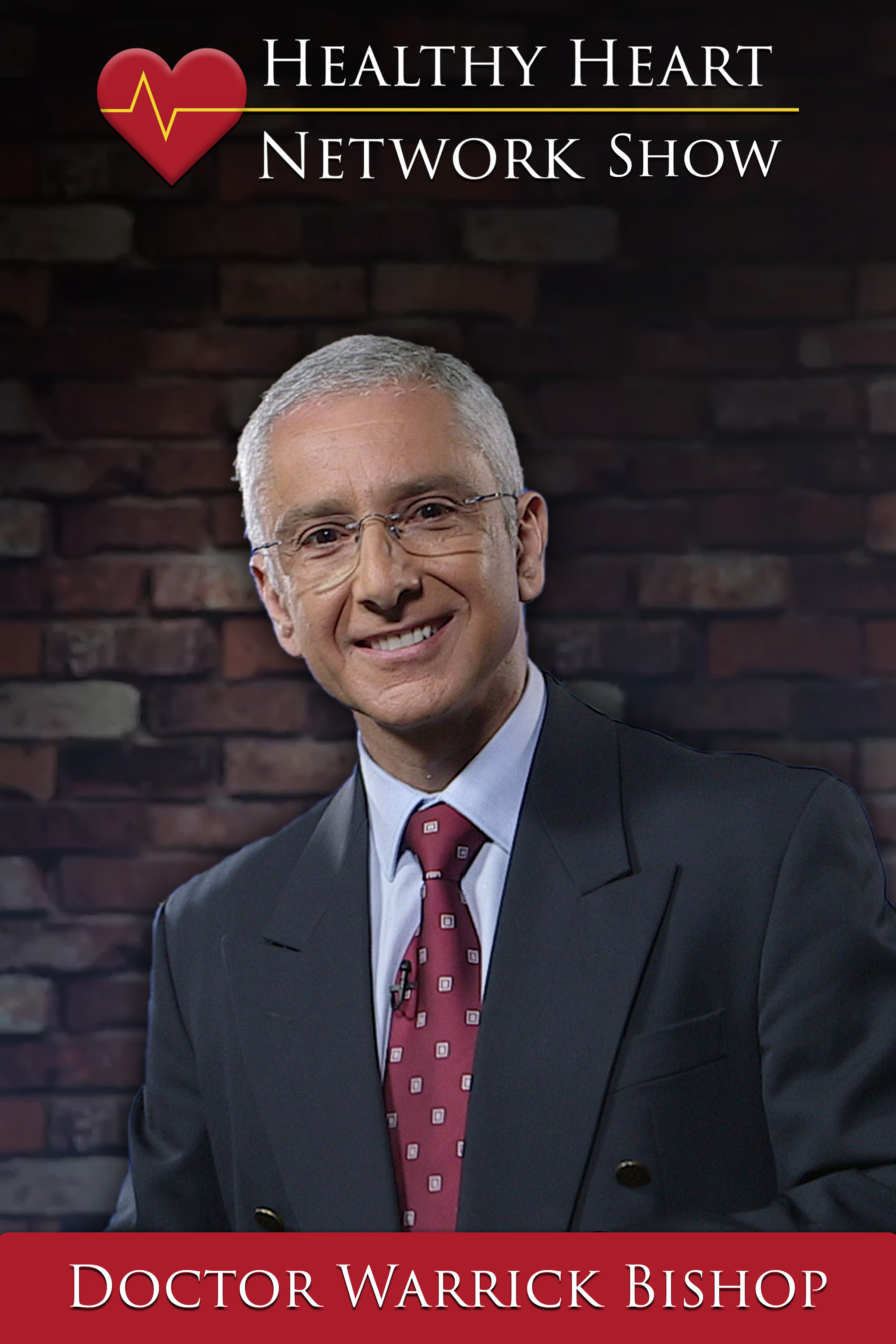
**Dr. Warrick Bishop:** Welcome, my name's Dr. Warrick Bishop. I'm a cardiologist, an author, and a keynote speaker. I'm the CEO of the Healthy Heart Network. I'm all about trying to help people live as well as possible for as long as possible. Heart disease is huge in Australia. Every 20 minutes, someone suffers a heart attack. Most of these could probably have been avoided if only we knew what to do. This podcast is all about helping you understand blood pressure, weight, and cholesterol for better health. If you enjoy this podcast, I would be honoured for a five-star review. You can share it with your family and friends. It may well save someone you love.
**Dr. Warrick Bishop:** Hi, my name is Dr. Warrick Bishop, and welcome to my podcast and videocast station. Thanks so much for tuning in, and I hope I've got something that you find interesting and informative. What I'd like to talk about on this podcast is the annual Queensland Lipid Group meeting that was held on the 20th and 21st of October. I had the chance to attend, and I thought I would share with you some of the discussion points and presentations because, quite frankly, I found it really interesting.
The meeting kicked off on Friday night with a presentation by Professor Derek Connolly. He is a consultant cardiologist at the Birmingham City Hospital. He has a huge footprint in research and development and has been involved with some of the largest trials that really define what we do in cardiology on a day-to-day basis. These trials include anticoagulation trials and trials with lipids. Interestingly, Professor Connolly himself set up one of the very first interventional acute angioplasty labs in the UK. So, he is a significant international player.
On Friday night, he spoke about overcoming the inertia of cholesterol lowering. It's complicated. We know that for high-risk people, lowering cholesterol is really beneficial. Most of the data, both internationally and locally, would suggest that for these high-risk people, a year or so after they've had their event, they're still not reaching what we would consider appropriate targets for their LDL cholesterol. There is difficulty with a number of people who have issues with taking medications on a regular basis, particularly the statin medications. So, Professor Connolly spoke about that. He discussed the European experience and touched on some of the newer agents, importantly a drug called Inclisiran, which is a novel agent currently available in Australia but not available on the PBS. We're expecting that would be the case next year.
This particular agent works through a protein system called PCSK9. By working through that protein system, it reduces LDL cholesterol, the so-called bad cholesterol, by allowing greater exposure of the LDL receptor on the liver cell. I've talked about Inclisiran on other podcasts. The interesting thing is this is a novel agent that uses an RNA-based molecule. It goes into the liver cell, is very specific to the liver cell using a special receptor binder or marker for liver cells, and then interferes with the RNA.
Now, if you're not quite able to remember what RNA is, think of DNA, which is the blueprint of our body. It defines everything that makes us up. That blueprint, the DNA, has amino acids that code for different proteins. The way we get those proteins from the DNA is that an RNA nestles up against the DNA, takes an opposite print, if you like, of the proteins that we need, and then runs through a protein factory within the cell to generate those proteins. If we can block the RNA, we can actually block the expression, or if you like, the creation of proteins that the DNA has on its blueprint. In this particular situation, the molecule Inclisiran blocks a protein that leads to a better expression of LDL receptors on the surface of the liver cell, therefore lowering LDL cholesterol levels.
Now, the really cool thing about this particular molecule is it is liver-specific, so it's very unlikely to cause any side effects beyond that. It's injected, and wait for it, here's the really cool thing: once you've had your first and second dose, which are about 90 days apart, the ongoing dosing is every six months. Imagine that—rolling up to the pharmacy to collect your script, rolling up your sleeve, getting a jab in the arm, and literally having your cholesterol addressed for the next six months. Pretty amazing. Anyway, as one would guess, Professor Connolly was superb in his delivery and presentation and really kicked off the meeting with a fantastic overview.
The next day, we then talked about the so-called bad cholesterol, LDL cholesterol, but we also discussed LP(a), that so-called bad cholesterol I call very bad or nasty cholesterol. It's a bit like LDL cholesterol but with a mischievous tail on it. That mischievous tail means it can be associated with premature coronary artery disease. It can drive inflammation and even drive blood clotting. We see it associated with wear and tear on the aortic valve. Well, Karim Kostner presented that and did an absolutely fabulous job in sharing information about LP(a) with us. I think we are going to see that more and more in the future as a target for intervention, as there are similar small molecules on the horizon, like Inclisiran, but targeted to the synthesis of LP(a). Watch this space.
For those of you listening, though, where there is a significant family history of premature coronary artery disease, if you've not had your LP(a) checked, it's probably worth a conversation. Currently, in Australia, there is no Medicare rebate for it. The test is about $60 out of pocket, but you only need to do it once. It's well worthwhile, and it will certainly inform whether LP(a) is a culprit or not in those high-risk families. So, have a think about that.
In the same session, we had a brilliant talk by the effervescent and always entertaining Professor David Cahoon, who spoke about one of his passions: omega-3 fatty acids. He shared a heap of detail around this. We know that there's been research over the years pointing to omega-3 oils being beneficial. But what Professor Cahoon really drilled down on is the importance of the omega-3 index. He basically went through a presentation that left us realizing that eating omega-3 oils is probably beneficial, but unless we know what's going on with the index, we really don't have a good idea or a good handle on exactly what's going on. In fact, one of the slides he presented gave us an inclination that one of the most significant predictors of sudden cardiac death was, in fact, a low omega-3 index.
How do you get that checked? The answer is through a blood test. Currently, in Australia, there isn't a rebate for that blood testing. It does cost about $100, which is not ridiculous, and it is incredibly insightful. So anyone looking to maximize their health span and reduce their risk through dietary intervention when it comes to heart health may wish to speak with their general practitioner about getting an omega-3 index. Very, very interesting.
We then had a series of talks on inflammation, and these were really state-of-the-art and fascinating in many ways. We had a discussion about colchicine and where that fits in, particularly with a thing called the inflammasome, which is a molecular conglomerate central to the process of inflammation and interacts with some of the messengers of inflammation. We had explained to us where some of these targets for diminishing inflammation may sit. Colchicine, which some of you may have heard of as a gout treatment, has been around forever and seems to have a role in reducing the activation of some of the agents involved with that inflammasome. Colchicine itself has, in fact, been shown to be beneficial in the reduction of cardiovascular events thought to be through that inflammatory process. So, really interesting stuff.
We also had some inflammation-related information shared with us by a psychiatrist who pointed to significant mental health issues having associations with diet and inflammation. There is very interesting work in that space, pointing to inflammation being associated with different psychiatric conditions as well. I think we should watch this space; it is an interesting area.
We had a comprehensive diet and inflammation presentation. We even had an immunologist present on diet and inflammation. The long and short of it is it's pretty complicated, and there's not a lot of robust information. When we look at potential foods that could be inflammatory, it's not entirely clear that is the case. Professor Peter Clifton, who presented the diet talk, when asked what his advice would be for patients, basically said to keep calories down and keep weight down, as these were the only two things that really had significant data behind them. The inflammation story, though interesting, is not there yet.
We also had a great session on imaging, and I had the chance to present on coronary artery calcium scoring. My good friend and colleague, Christian Hamilton Craig, presented on cardiac CT or CT coronary angiography. This was an update on both these topics, and one of the really striking bits of information was the realization that with imaging, we are blurring the line between primary and secondary prevention. Historically, we've always thought of primary prevention as people who haven't had an event and secondary prevention as people who have had an event. But with the benefit of imaging, we can find people who have not had an event but have lots of plaque in their arteries. This then raises the question: how do we treat them?
Matt Budoff and colleagues produced a paper where they looked at people with calcium scores of 400, which is pretty high. They actually found that this calcium score of 400 relates in terms of risk as being very similar to someone who's already had a coronary event. So, we completely blur the line there between primary and secondary prevention, and we can start to look at plaque burden as the marker of intensity and intent of therapy. A score of 400 should be considered a high-risk feature as we would consider someone who's already had an event. This is really, really important.
Anyway, we finished off the meeting with a couple of fantastic case presentations looking at the paleo diet and a case study with that. Is alcohol a problem? And patients with LDL, lipoprotein(a), and triglyceride abnormalities. So, it was a swimmingly good weekend away with plenty of information. I really enjoyed sharing it with you. I hope you found some of that interesting and informative.
If you've got any suggestions for future podcasts, drop us a note at info@drWarrickbishop.online. For now, though, thank you again for listening. I wish you the very best. I hope you live as well as possible for as long as possible. Take care and bye for now.
Join the Healthy Heart Network and become part of our growing community. If you're interested in your heart health and the risk of heart attack, then join the Healthy Heart Network for only $5 as a lifetime member. This represents $55 worth of value. We offer help to people in understanding their present state of heart health, what their current level of risk is, and the positive steps they can take to improve their risk of heart attack in the future. Go to www.healthyheartnetwork.com.au and click the "Join the Family" button.