**EP393: Dietary Influences on Pancreatic Cancer and Heart Failure: Salt, Vitamin E, and Plant-Based Diets**
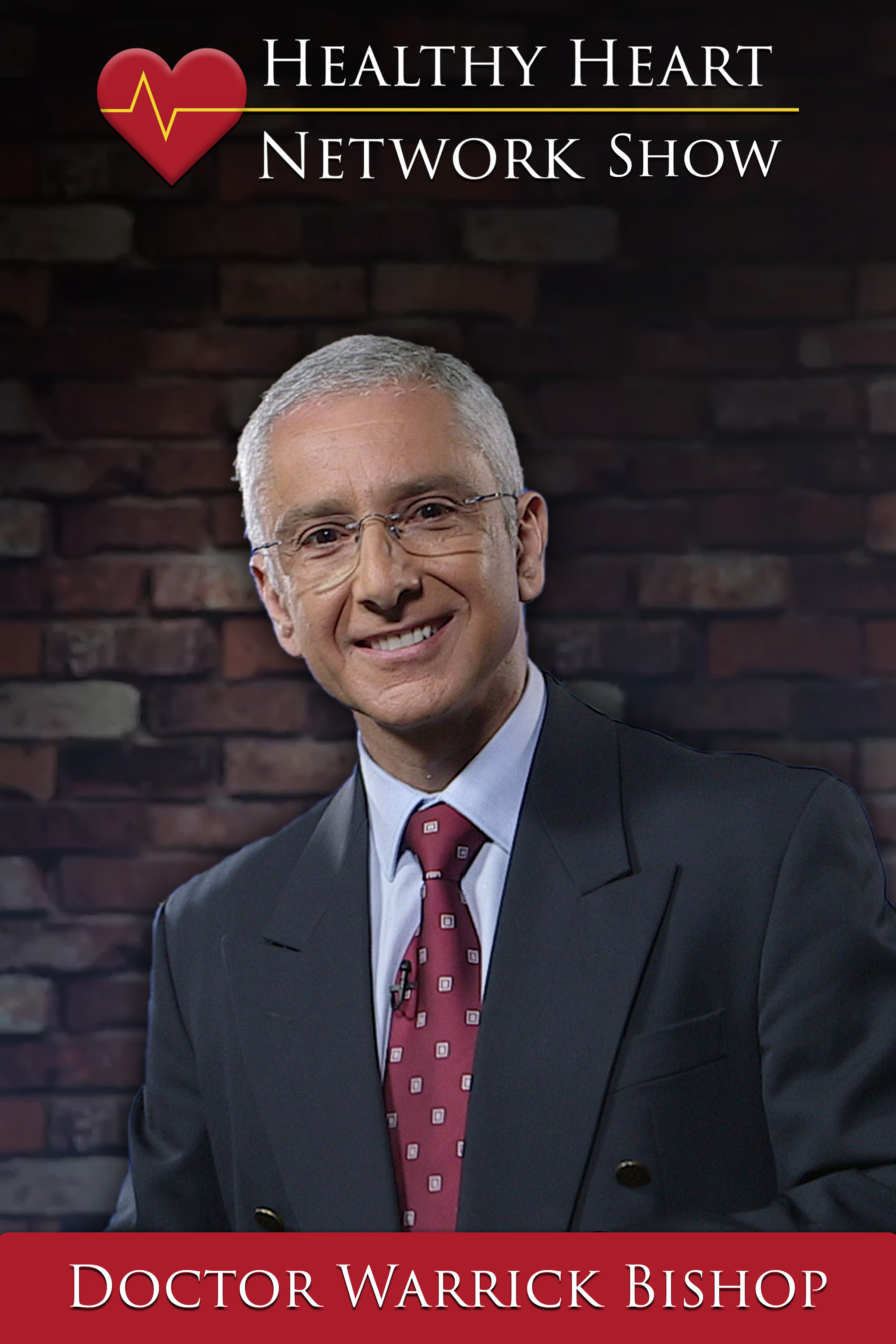
**Dr. Warrick Bishop:** Welcome, my name's Dr. Warrick Bishop. I'm a cardiologist, an author, and a keynote speaker. I'm CEO of the Healthy Heart Network. I'm all about trying to help people live as well as possible for as long as possible. Heart disease is huge in Australia. Every 20 minutes, someone suffers a heart attack. Most of these could probably have been avoided if only we knew what to do. This podcast is all about helping you understand blood pressure, weight, cholesterol, for better health. If you enjoy this podcast, I would be honoured for a five-star review. You can share it with your family and friends. It may well save someone you love.
**Warrick:** Oh, g'day, g'day. Warrick here. And thank you for joining my podcast and videocast station. Look, I don't take it for granted. I'm really grateful that there are people out there listening to this. Having done well over 350 podcasts, I can tell you it takes a lot of time, takes a lot of preparation. It takes a lot of mucking around. It takes me really hiving off time that I could spend doing other things. And I do it because I keep getting nice feedback from people just like you who have a listen and find something that I've said to be valuable, interesting, helpful, or just informative. So it is my pleasure, and I do appreciate you listening in.
Today I'm going to talk about a couple of things. I'm going to talk about salt reduction. I'm going to talk about bone health, which is more than just calcium. I'm going to talk about cancer screening on one aspect of it that's pretty important. I'll touch on heart failure, which is a super huge topic, and I'll even talk about plant-based diets.
So without any further ado, what about salt? Well, we know that salt has a big role in the cardiovascular system. The World Health Organization reckons that we should be taking less than one tablespoon—no, I've got that wrong—less than one teaspoon per day. And that's just a couple of grams, actually. There was a recent study that looked at salt substitutes using potassium rather than sodium. So potassium chloride rather than sodium chloride. And these potassium salt substitutes actually cut stroke risk by nearly 15% and death risk by over 10%. This is outrageous. It really sort of speaks to the fact that if we're going to change the landscape, we need to be thinking about fixing up sodium chloride and its problems with the cardiovascular system, starting to implement potassium instead and looking at salt substitutes.
Similarly, it turns out, as you might guess, that most people don't put a whole lot of salt from their shaker all over the meal. The culprit is packaged and processed foods, so be aware of salt. Think about a salt substitute at home, but think about legislation mandating salt substitutes for processed foods. Wouldn't that make a difference? Think about it: a reduction of death by 12 percent, a reduction of stroke by 14 percent.
Okay, enough on salt. Let's talk about bone health. I came across an interesting paper looking at vitamin D—sorry, not D, E. D is very linked to bones, but I'm talking about E on this occasion. You'll remember the fat-soluble vitamins are vitamin A, D, E, and K. Well, E has a role as an antioxidant and anti-inflammatory. It has been shown in animal studies to have mixed results for bone health, and in some human studies, there's been perhaps a link between high levels of vitamin E reducing bone mineral density, so not being particularly good at all.
What do we do? The long and the short of the information I came across when it comes to vitamin E is there's no clear association between that fat-soluble vitamin and improved bone mineral density. That doesn't mean that D for dog and K for kappa may not be valuable for bone mineral density, and I think they certainly are. These days, I'm certainly suggesting to my patients to consider vitamin D and K2 for their bone and vascular health.
Now, let's talk cancer and cancer detection. One of the biggest difficulties, or one of the most problematic types of cancer for early diagnosis, is pancreatic cancer. And it appears to be increasing in incidence, particularly in younger people. The symptoms are vague. People have weight loss, fatigue, jaundice, and back pain. Ninety percent of cases are in individuals 55 years of age and older, but it's rising in people who are 40 years of age, so it doesn't appear to be limited to just that older age group.
What are the sort of associations? What might make someone think that they could be at risk? Well, lifestyle factors like smoking, alcohol, and obesity all raise risk, but they raise the risk of all cancers, actually. The really sad thing about pancreatic cancer is only 15% are ever caught early enough to have a significant impact on survival rates because it's deep. If you remember where the pancreas is, it's deep in your abdomen below your xiphoid sternum, which is the very bottom of the sternum where the ribs come together at the front. It's involved, obviously, in—well, not obviously—but it is involved in what we call glandular function, so it produces insulin. It's important for that insulin to go into the bloodstream, but the pancreas also excretes enzymes into the gut for digestion, so it's where a lot of the amylases and those enzymes for breaking down protein are produced as well.
There can be a genetic predisposition when it comes to pancreatic cancer. So if you are someone who's had it in the family or have the BRCA gene, be aware.
Quick couple of words on heart failure and heart failure with preserved ejection fraction. That's the type of heart failure that we're seeing more and more with people as they age because the heart's becoming stiff. It's not becoming large and flaccid and failing to contract; it's becoming small and thick and stiff and failing to relax—a different way of failure. We've now got more drugs in the armamentarium, so if you are aware of someone in their later years who is suffering with shortness of breath related to that heart failure with diastolic dysfunction, that failure of relaxation, then they should be following up with their specialist to make sure that they are taking advantage of the range of drugs that we have available, which are the drugs like empagliflozin, dapagliflozin, semaglutide, to zepatide, and finerenone.
These are all drugs that can act on sodium and glucose metabolism, can act on weight, and drop weight for people, which has been shown to be beneficial and even act on the electrolyte system. So, cardiac failure, heart failure with preserved ejection fraction is looking like we've got more and more in our armamentarium to deal with it. What's the best way to deal with it? Try and avoid it in the first place. If you are carrying too much weight, if you are not managing your high blood pressure properly, you are going to be a candidate for heart failure with preserved ejection fraction.
The last article or paper I came across was: can a plant-based diet be nutritionally adequate? And I guess the question around that is concerns regarding intake of B12, iron, calcium, the omegas—omega-3 oils in particular, zinc, iodine, and protein. Well, it turns out that this has been looked at. We do know that plant-based diets tend to be, at least in the literature, associated with lower risk of cardiovascular events and cardiometabolic disease.
Plant-based diets are assessed nutritionally in a study situation where there is appropriate input by a trained nutritionist or dietician. There is no question that with appropriate care, consideration, and planning, all the concerns—which are the B12, iron, calcium, zinc, iodine, protein, and omega-3 oils—can all be addressed with appropriate planning. One of the other things is that plant-based diets have been said to also reduce inflammation load, and we know inflammation is central to all sorts of longer-term chronic disease pathologies. So, a plant-based diet, if you're thinking about it, plan it properly. Make sure you deal with the potential pitfalls that may arise from not eating meat.
So what are the takeaways? What are the summaries? Salt reduction really works. Read labels. It's not what you have in the shaker; it's what you are consuming that's being processed and fiddled around with before you got it. Bone health, it's much more than just calcium. Vitamin E—don't waste your money on it for bone health at this stage. Think about D and K2 and check out some of my other podcasts on bone health, and particularly K2 and lipid-lowering therapy.
Cancer screening—pancreatic cancer is a big issue there. Not sure how to get around it; it probably needs imaging where that fits in. There are costs to MRI, and there's radiation exposure to CT. I don't know the answer, but if it's in your family, be aware and talk to your GP about it.
Heart failure with preserved ejection fraction—we've got more medications available to us, which is really good to know. And if you are a plant-based or thinking about a plant-based diet embracer, then with appropriate care, consideration, and planning, you can make that work without any deleterious effects on your nutritional requirements.
Hope that all makes a bit of sense. I'd love you to share this with some people or say something nice about it. Maybe give us a little review if you like it. But like the good old days, if you didn't like someone or didn't like something, maybe just keep it to yourself. And if you do like it, spread the word.
I am going to jump. I do wish you all the very best. I hope you live as well as possible for as long as possible. Take care and bye for now.
**Dr. Warrick Bishop:** Hi. Ever wondered what your risk of heart attack is? You should. It's the single biggest killer in the Western world. We're talking one death less than every 30 minutes in Australia. One death less than every 60 seconds in the United States. Nine million deaths globally per annum.
Well, how do you check your risk? Well, you can go to www.virtualheartcheck.com.au. You'll find out about your risk and what can be done beyond that to be even more precise.