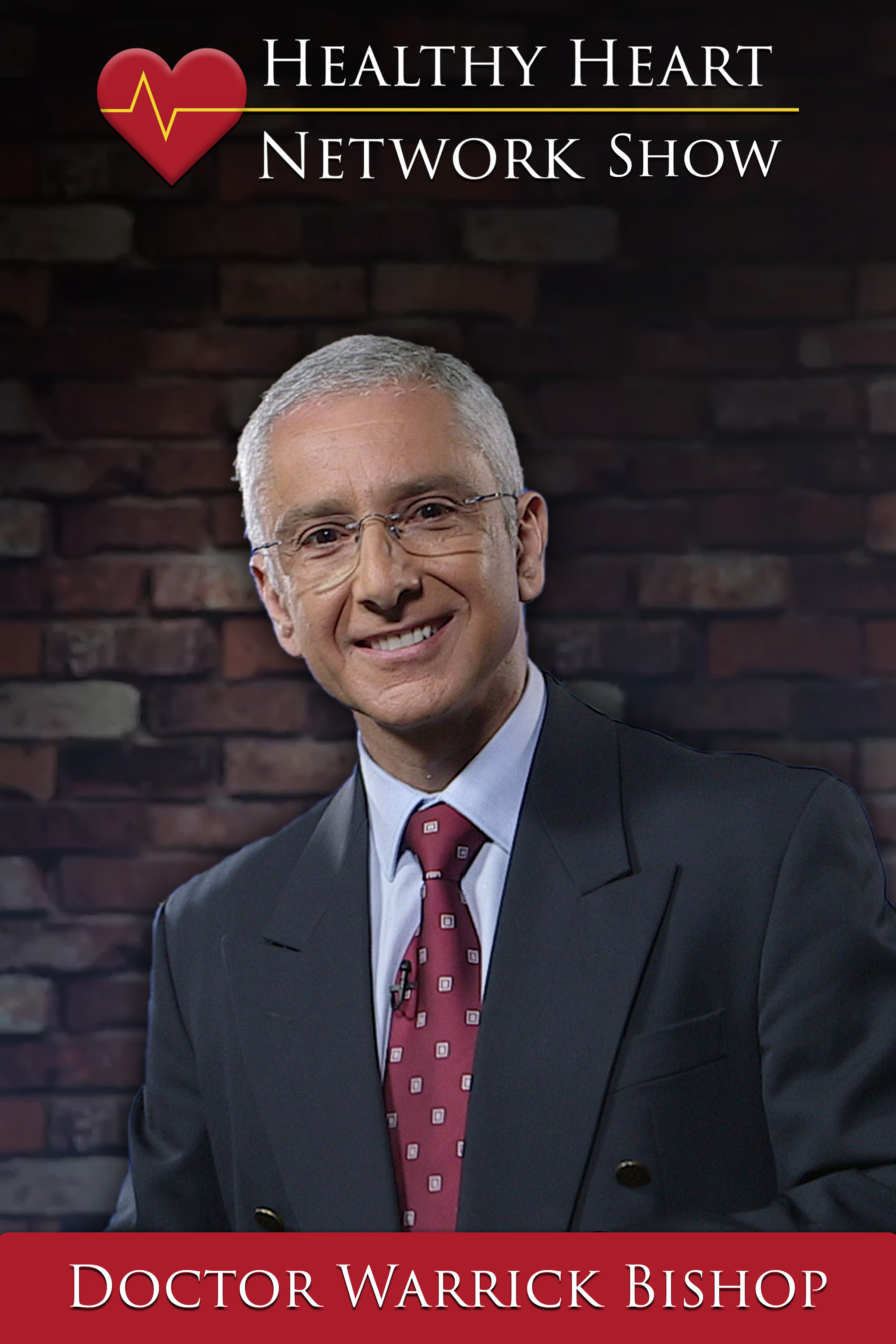
[0:00] Welcome, my name is Dr. Warrick Bishop. I'm a cardiologist, I'm an author and a keynote speaker. I'm CEO of the Healthy Heart Network. I'm all about trying to help people.
[0:12] live as well as possible for as long as possible. Heart disease is huge in Australia. Every 20 minutes someone suffers a heart attack. Most of these could probably have been avoided if only we knew what to do. This podcast is all about helping you understand blood pressure, weight, cholesterol for better health. If you enjoy this podcast, I would be honoured for a five star review. You can share it with your family and friends. It may well save you.
[0:41] someone you love.
[0:43] Hi, it's Dr Warrick here and thank you so much for joining me on my podcast and videocasting station.
[0:51] I do appreciate it. Look, I'm going to be talking about VO2max today. You will have heard of VO2max. People are talking about it more and more, particularly in the longevity space. VO2max has been something that's been linked to athletes for a long time, but it's now getting more publicity, and it strikes me as not an unreasonable thing to share a little bit about.
[1:21] that I'm creating down in Bathurst Street, Hobart. We're about to put VO2max testing and training into that wellness centre. And a bit of background might be interesting for some and may prompt you to want to check it out for yourselves. I know I'm going to be getting my VO2max tested today.
[1:44] Then go through the training program and retest it for my own interest and my own best health journey.
[1:51] For those who are listening, I'm going to share my screen in a minute and show some slides. So,
[2:02] I will do my very best to make sure that if you're listening to this on a podcast, you don't miss out. If you do want to see the slides, this will be on YouTube, so check it out there.
[2:13] So, without any further ado, let me bring up the appropriate
[2:22] images and we can start talking about VO2max. Now one of the really easy ways of thinking about VO2max is think of it as your body's engine size size.
[2:36] And that means that...
[2:39] V8 engine will have a greater VO2 max than a small four-cylinder engine. Now I'm going to put it in
[2:50] Refine that even a little bit more. What I really want you to get is that it's more about the blood...
[2:57] Getting to where it meets.
[3:01] to be provided for the muscles on the body to do its work. Or when it comes to the engine, it's all about the petrol getting to the piston where the work is done. Think of the pistons as the muscles burning the fuel.
[3:20] and think of the few
[3:22] in our bodies as the oxygen. So really it's not just about the engine size,
[3:29] What it's really about is delivering that fuel, how much fuel is being delivered,
[3:34] to...
[3:36] The pistons, which are going to be doing the work in our bodies, it's going to be about how much oxygen is being delivered to us.
[3:43] To the muscles.
[3:45] Now.
[3:47] Why does it matter? Well, we know a reduction of approximately 50%
[3:52] Um...
[3:54] Because...
[3:56] So in your risk of death, if you can move from a low to an average VO2 max, this is not the same as age. This is a measure which is separate to age alone. So you can reduce mortality by improving mortality.
[4:11] the way oxygen is delivered to your body.
[4:15] Yeah.
[4:16] 45 extra days of life are gained per one millimetre per kilogram
[4:22] per minute
[4:24] gain in VO2max. I'll tell you what that one mil per kilo per minute means. Basically,
[4:31] Scientists have been able to equate that if you improve your VO2 max by a certain amount, you will get literally extra days. But it's not just extra days because you're functioning better. They're going to be better quality days. And it turns out that VO2 max...
[4:49] the way you're
[4:51] Body delivers oxygen to those tissues, particularly those functioning tissues.
[4:56] is...
[4:58] all about.
[5:00] is indeed the very best predictor of longevity beyond every other major thing.
[5:09] Standard risk factor like smoking blood pressure and cholesterol.
[5:14] So...
[5:16] What is VO2max? What stands for Volume of Oxygen...
[5:21] Maximally. And it's all about the maximum rate
[5:25] Your body can deliver oxygen during intense exercise. That means that you need lungs that function well to absorb that oxygen, because if you're not absorbing oxygen, you can't deliver it to the tissues.
[5:41] that
[5:41] Oxygen that's absorbed into the blood that's in the lungs then travels to the heart and has to be pumped around the body.
[5:50] So having a heart that pumps well is really important for that delivery of oxygen to the tissues. And then lastly, you need...
[6:00] the engine component, the pistons, the muscles, the organs, to receive that component.
[6:09] delivery of oxygen. So these things all work together. And for the heart, we think about VO2 max being closely related to the stroke volume, which is the amount of blood per heartbeat.
[6:24] We know that the amount of oxygen that the blood can carry is directly related to the hemoglobin, and the muscle volume is closely linked to muscle mass, but also mitochondrial function.
[6:40] giving some idea of how the muscles extract oxygen.
[6:47] from the blood. So we're thinking oxygen being taken in, oxygen being delivered, how well is the heart working, and the muscles and mitochondria.
[6:58] Let's pause for a second and think about that longevity data.
[7:04] But those who can see this, and I'm looking at this on YouTube, click...
[7:09] You can see as we go from left to right, we are reducing or cause mortality. For those who are not...
[7:17] able to see the graph I've got. I've got this beautiful coloured graphic which shows me for people with low...
[7:26] VO2 max, they're at a significant increased risk of mortality
[7:34] simply by having that low VO2 max. And that increased risk...
[7:40] is over 4.5 times compared to someone with excellent VO2 max.
[7:46] The really important thing about this graph, and for those listening, try and imagine this, if we can improve or shift someone's VO2max from low...
[7:56] to below average,
[7:58] To average, we can take their risk
[8:02] from 4.5 times
[8:06] compared to someone who's got excellent VO2 max.
[8:10] to only two times. That's a massive reduction of 50% or more by shifting two levels of VO2 max. Excellent VO2 max is rated as one times risk, so that's the gold standard.
[8:26] It's extraordinary that the mortality reduction per one met increase in VO2 max, so that improvement is in the order of...
[8:37] 15%. So these are powerful changes if we're able to implement them, and they all drill down to exercise. And if you've listened to any of my exercise sessions,
[8:48] Podcasts in the past, you'll realise that exercise is almost a magic bullet when it comes to longevity and quality of life.
[8:57] When we talk about VO2max, we use numbers and we're talking about
[9:04] Really about millilitres of oxygen delivered per kilogram per minute.
[9:11] Don't need to remember that necessarily, but that's what we use because we often talk about cardiac outputs in a minute.
[9:19] Um...
[9:21] context or framework.
[9:25] In terms of numbers,
[9:27] In general terms, men have bigger hearts, bigger lungs, and bigger muscle-ness than women. And so men's...
[9:36] via Tumix
[9:38] parallels women, but it's a little bit better.
[9:41] So when we think about classifying VO2MX,
[9:45] superior.
[9:46] Top of the pile is 55.00.
[9:50] Or better for me:
[9:52] 46 or better for women. Excellent is 49 to 55 for men, 40 to 46 for women. Good is 44 to 48 for men.
[10:05] 35 to 39 for women. Average is 39 to 43 for women.
[10:12] The main 30.
[10:14] to 34 for women below average.
[10:17] to reach it to the right
[10:19] For men, 25 to 29 for women. And poor is less than 32. For men, less than 25 for women. And interestingly, they've even done...
[10:32] data to show that once you're down into the teams, that correlates with an inability
[10:39] to continue to live independently. So it's really significant. When we look at...
[10:46] VO2max over time in the standard population, we see that there's about a 10% decline in
[10:56] per decade.
[10:59] So...
[11:00] That's pretty significant. And that decline occurs from about 30 years of age. So without...
[11:07] appropriate attention. We're looking at a 60 or 70 percent decline as we're approaching 80, 90 years of age. This is really a major play into how people are going to function, how people are going to live well, how people are going to live independently.
[11:25] Well,
[11:27] Why are we seeing the O2 max decline with age? Is it just because people don't exercise as much?
[11:34] Possibly. But there's also some physiological reasons that are associated with aging. One is that the heart's pumping...
[11:43] efficiency changes as we age. We often see that the heart gets a little bit stiffer
[11:48] less compliant, and cardiac output can fall, particularly in sedentary adults. So people who are exercising a lot don't see the same decline, but sedentary adults can get significant reduction
[12:04] Because the heart becomes stiff. And as it becomes stiff, it doesn't pump as much blood. And...
[12:10] Falling stroke volume, the amount of blood pumped
[12:15] With each pump,
[12:16] can account for up to 40% of the decline of VO2 max as people age.
[12:21] Hemoglobin can drop off a little bit with age as well. Of course it can be an important marker of other things like renal disease or true blood loss which we might see.
[12:32] with an occult cancer, for example, but a drop in the haemoglobin will drop the VO2 max as well. And muscle mass loss as we age can account for up to 30% of VO2 max decline. Muscle mass loss, you may have heard of the word sarcopenia. This...
[12:51] Reducing the muscle mass loss reduces, therefore, the amount of tissue that can extract oxygen. But these same muscles often lose mitochondrial density and, therefore, less ability to draw oxygen from the blood. So, heart not working as well, hemoglobin dropping off and losing muscle mass will all contribute to VO2 max, your ability to...
[13:15] to
[13:16] take oxygen out of the blood as we age.
[13:23] Well, how do we test it? How do we get those numbers? How do we know if someone's sitting at 32 or 45 or even above 55? Well, the gold standard is really metabolic card assessment, which looks at inspired and expired gas directly. This can take...
[13:44] 10 to 15 minutes as a protocol, but it's measuring
[13:49] air in and air out and directly calculates the amount of oxygen
[13:55] being taken out in the tissues. So that's the gold standard direct measurement of that gas.
[14:03] VO2X can be tested in the field and in clinics
[14:08] And you can do that on sort of exercise protocols, which have been validated
[14:14] using direct gas assessment testing. So there are validated heart rate tests
[14:22] monitored tests that go into equations and can help give us a fairly accurate guide as to where VO2 Max sits and some of the wearables like the Apple Watch Garmin
[14:35] and polar all can make assessments of
[14:40] where Veritimax is. They're
[14:43] Not bad. They do give an idea.
[14:47] They are not the gold standard, but terrific as a way to track and see what's going on.
[14:55] I guess it's reasonable to ask the question, how would you improve your VO2 max if it was down? If you are, for example, a 60-year-old with a below average or average VO2 max and you want to start to build it up.
[15:09] Well,
[15:10] If we think of an exercise pyramid, um...
[15:16] At the bottom of that pyramid is so-called zone two, or foundational exercise. And why I want you to think of a pyramid is as we move through these different zones from...
[15:30] the base of this exercise pyramid to the peak of the pyramid, you need less and less exercise.
[15:36] of the exercise at that certain intensity because this pyramid
[15:41] gets increased exercise intensity as you go to the top. At the very tip is maximal intensity,
[15:48] And so what we do is we start at the bottom with 70% to 80% of all exercise in Zone 2. We then want to get people up into threshold workouts. This is a slightly different conversation, but looking at lactate clearance and cardiac output. These are paces where you can...
[16:08] exercise fairly confidently. You could speak, but you'd prefer not to. And this sort of lifts lactate threshold. I'll talk about that another time.
[16:18] The next level of exercise on that pyramid is high-intensity interval training. And this really accelerates the heart. You're pushing up to 90% of predicted heart rate max. And you're doing short interval sessions looking to really crank up that VO2 max. And this is probably one of the most effective ways of doing it. It requires generally exercise.
[16:42] at least one to two sessions a week, preferably two,
[16:48] But one to two would start to see the body responding. And then, of course, you can do occasional absolute maximum exercise as well.
[17:00] Interestingly, a lot of people are wearing devices at the moment.
[17:04] And the question is, can your watch tell you your VO2 Max? Well, indeed, it can give you a guide. It's not the most accurate, but it's not a bad way to go. If you can correlate your watch VO2 Max to a gold standard VO2 Max, you know what that is. You can then track your watch and see if it's moving up or down.
[17:28] And...
[17:28] subsequently go back and retest formally
[17:33] So there is some value in those wearable devices, and depending on which exact device you get, it would depend a little bit on some of the nuance on the accuracy of that particular device.
[17:47] .
[17:49] It's really interesting to know that
[17:52] The sports world have been using VO2max for a long time, and particularly for sort of, if you like, talent assessments. So someone who's young with a belief that they might be a good long distance runner or a midfield player for a ball game such as football or Australian rules or rugby, someone who might really need to have a great engine for long distance, those individuals...
[18:21] previously have gone through sort of talent assessment, VO2 max testing. And you can imagine, cyclists would fit in there as well. You can imagine that if a young individual who was looking for a sporting career, maybe wanted to be a professional cyclist,
[18:39] went and undertook VO2max testing training at a time when they were
[18:44] pretty close to their peak, that they could ascertain whether their VO2 max naturally was very high.
[18:52] or not.
[18:54] If it was not, then there may really be a sensible conversation about that individual not pursuing that particular line of sport, maybe looking at other things that didn't require the VO2 max endurance or oxygen energy.
[19:11] removal from the tissue. So that's one way that VO2max has been used in sport. But the other way that's really interesting is that
[19:21] Sporting coaches have noticed that they've found or come across athletes, say,
[19:27] Athlete A and Athlete B, who have very similar
[19:32] VO2max, but their performance is really quite different. And what that boils down to
[19:39] is a difference in the utilization of the fuel that's being delivered.
[19:46] So...
[19:47] two athletes
[19:49] They both have
[19:52] V8 engines?
[19:55] But when push comes to shove, one athlete performs
[19:59] Well, Athlete A, if you like, performs much better than Athlete B.
[20:04] And when they look at that, it comes down to how well these athletes are burning or utilizing that fuel. So they've got V8 engines, but athlete B is not burning the fuel as well. Think...
[20:16] dirty spark plug or poor mixing of oxygen in the
[20:21] piston and compression chain. But when it comes to humans, it's to do with mitochondrial function, but really important, lactate, and the formation of lactate in that process of generating energy.
[20:34] That is another story, but it's a really interesting story.
[20:38] between not just having enough oxygen getting to the tissues, but using that oxygen effectively. That's the lactate bit.
[20:48] What can this mean for you? Well, knowing your VO2 max is pretty helpful for mortality reasons. And if it's down, what a great opportunity to try and
[20:59] build it up. So, a good starting point
[21:02] is starting and knowing what it is. I know I did a VO2max years and years and years ago as a medical student. Can't remember what it was but I know it was in the higher range because at that time I was playing soccer, I was running distance and I was bushwalking regularly. So very high VO2max as you'd consider appropriate for someone in there.
[21:25] late teens, early 20s,
[21:28] Now I'm not sure where it is, and I know when we get this VO2 max...
[21:32] testing and training systems set up in longevity labs at 88 Bathurst Street in Hobart. I'm going to be going down and checking where I am and I suspect there's going to be room for improvement.
[21:45] That room for improvement, moving from
[21:48] low to average, for example, can reduce mortality risk by 50%. So this is very, very powerful stuff. And starting on this sort of journey, the sooner the better makes the most sense.
[22:01] The other trade-off as well is, of course, not just longevity, but if you can improve your VR2MX, you're functioning better. And that means on a day-to-day basis, quality of life improves.
[22:12] So he's doing it.
[22:14] For all the right reasons.
[22:16] That 10% decay in VO2max that I alluded to can be reduced...
[22:27] Buy 5% by being active and with appropriate training, maybe even reduce even more. I'm very open to this idea that you may be able to flatten it out, improve, and then build on that.
[22:41] from that point.
[22:43] To get good data, testing properly makes perfect sense. So using a gas exchange gold standard is perfect. And I did allude to lactate being important in that VO2max journey. And that's something that I'll touch on in another episode.
[23:04] podcast and video.
[23:07] So, yeah.
[23:08] I hope you found that interesting. That's VO2max in a bit of a nutshell.
[23:13] It's...
[23:15] all about the delivery of the fuel to the muscles, the tissues that are going to use it,
[23:23] Lactate is more about how the tissues or muscles use that fuel. It's another story, and I'll come back to that in another podcast. So tune in. I hope you found that interesting. I do hope you think about that VO2 max and think about maybe getting it properly assessed, maybe having a watch or a device that can help you know where you are with it.
[23:45] And really think about the strategies that you might put in place for yourself to ensure that you are maximizing your ability to maintain your VO2 max as you age.
[23:57] Well, if you've got any queries or questions, drop me a note at info at drwereckbishop.online. As always, I'm incredibly grateful if you've listened this far. It means I've kept your attention. Hopefully, I've given you something that's valuable for your own best health journey. If you like this, please share it.
[24:15] I'd also really appreciate it if you subscribe.
[24:19] And for now, I'm going to wrap it up. I'm going to wish you the very best. I hope you live as well as possible.
[24:26] for as long as possible.
[24:27] Take care and bye for now.
[24:31] Hi, ever wondered what your risk of heart attack is? You should, it's the single biggest killer in the Western world. We're talking one death less than every 30 minutes in Australia, one death less than every 60 seconds in the United States, nine million deaths globally per annum. Well, how do you check your risk? Well, you can go to
[24:56] www.virtualheartcheck.com.au. You'll find out about your risk and what can be done beyond that to be even more precise.