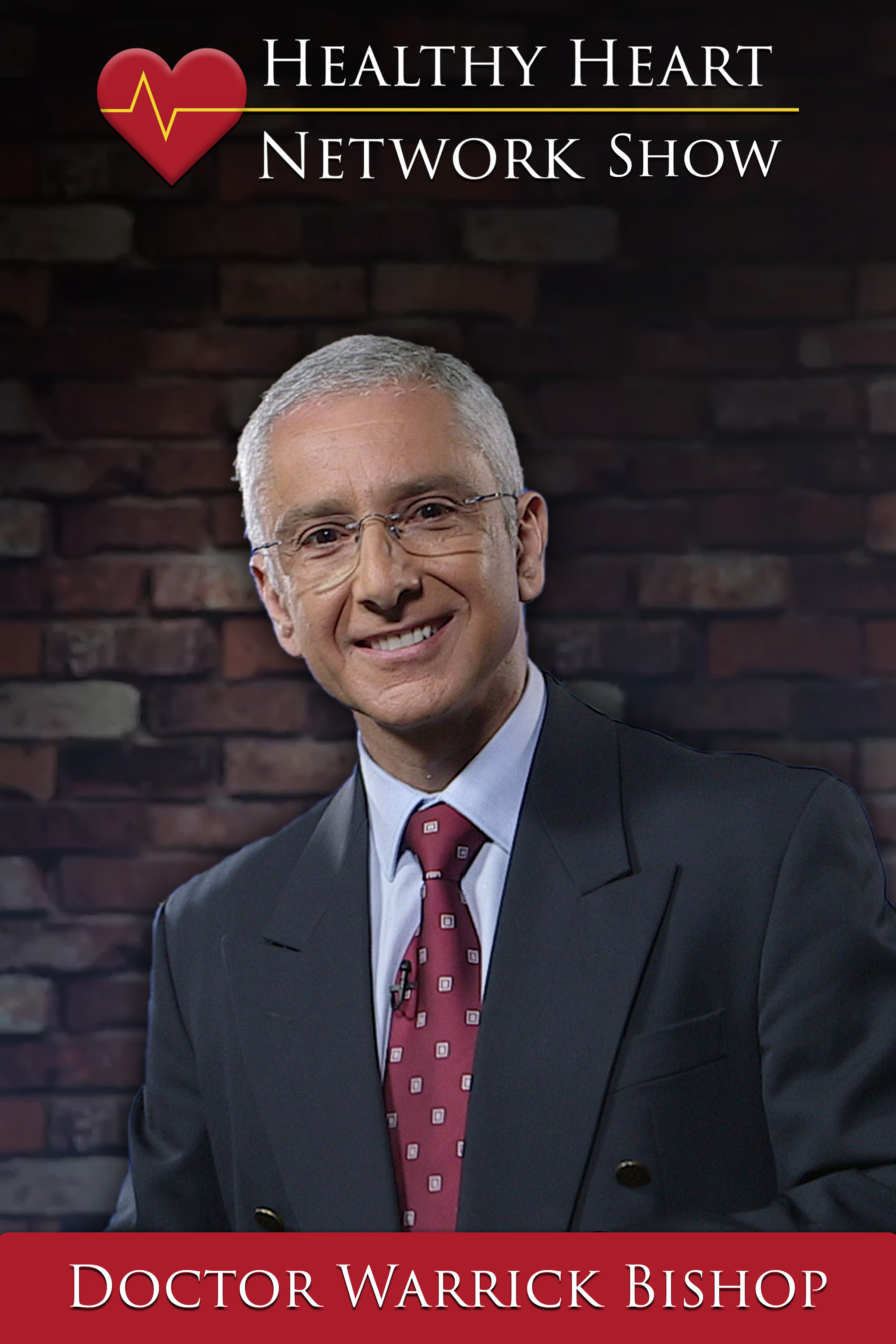
[0:00] Welcome, my name is Dr. Warrick Bishop. I'm a cardiologist, an author and a keynote speaker. I'm CEO of the Healthy Heart Network. I'm all about trying to help people
[0:12] Live as well as possible.
[0:13] for as long as possible.
[0:15] heart disease is huge in Australia.
[0:18] Every 20 minutes someone suffers a heart attack. Most of these could probably have been avoided if only we knew what to do.
[0:26] This podcast is all about helping you understand
[0:29] blood pressure, weight, cholesterol,
[0:32] for better health.
[0:33] If you enjoy this podcast, I would be honoured for a five-star review. You can share it with your family and friends. It may well save you.
[0:41] Someone you love.
[0:42] *music*
[0:45] Hi, it's Dr Warrick here, and thanks so much for joining me on my podcast today.
[0:50] and videocast station. Today I've got an interesting one, or at least I think it's an interesting one. It's about VO2max and lactate. Well, you already know that because you've seen the title of this podcast. So first of all, thanks so much for joining me.
[1:05] If you like what I produce, please share it with someone and please subscribe.
[1:12] Oh, and like it. That'd be really cool. That's what everyone sort of needs on social media. I'd really like to see that happen because I've put a fair bit of work into these presentations, these bits of information, and honestly I'd really like to see...
[1:28] This work will hand with as many people as possible if it could help them.
[1:32] So, I'm going to be talking about VO2max, which is really interesting and talks about fitness. If anyone's been following me...
[1:41] particularly listening to my podcasts around aging, VO2 max has been repeatedly flagged as a very, very important marker for aging.
[1:54] your longevity.
[1:58] But there is talk about this thing called lactate, and today I'd like to share a little bit around that, because, well, I think it's a pretty interesting story. So I actually do have some slides for this, so if you're watching it on YouTube, that's fine. If you're just listening, that's okay, because I'll present the information without you needing to having to see anything. But...
[2:21] Let's do that. I'm going to share my screen and we'll get on and talk about VO2max...
[2:30] and lactate and what the difference is and
[2:33] White people talk about her.
[2:35] Thank you.
[2:36] Well, interestingly,
[2:39] Both are markers for fitness, but there is a reason that lactate is probably slightly more sensitive. And that's what I'll touch on today. Interestingly, though, it seems that elite athletes and their coaches in particular have touched on this recently.
[2:55] literally decades ago, and have been using lactate as a marker, it...
[3:01] may well be creeping into the longevity space, which is why I'm going to talk about it, because the longevity space constantly comes back to VO2 max.
[3:11] So why...
[3:15] Might VO2 max not be enough? And why might lactate be more useful? Well, let's just talk about
[3:23] what the difference is or what VO2max actually measures. And to a large degree, VO2max
[3:29] really gives us the maximum amount of oxygen your body can use during intense exercise. The way I'd almost put this to you is if you try and use a car analogy, and you think about how much petrol or fuel, oxygen, can that engine get to the cylinders, the pistons or the muscles.
[3:53] Thank you.
[3:54] So VO2max really reflects to a degree how big your engine
[3:59] how big your engine is, how it gets fuel to the pistons, the muscles, and delivers that fuel there.
[4:09] A high VO2 max, a V8 engine, generally means you've got a strong cardiovascular system.
[4:17] And that's a really good and validated health marker. Sometimes it's not true, but most of the time it's
[4:26] Pretty reliable. But it's not the whole story, and this is why...
[4:31] coaches,
[4:33] brought it to elite athletes years ago, what they noticed was that you could have...
[4:37] two athletes with identical VO2 max,
[4:41] i.e. both getting lots of fuel to their muscles, their pistons, but they had different outcomes. And what they realized was that that was down to how the muscles utilized the oxygen. So now let's think about...
[4:59] a V8 engine and the spark plugs in some of them may be a bit old or the mixing of oxygen may not be that effective. And so even though we've got two V8 engines receiving the same amount of fuel, i.e. the same VO2 max, one of those engines
[5:20] is not as effective and not as efficient
[5:23] So
[5:25] Lactate is our...
[5:27] differentiator it's a little bit of extra granularity on how well is that fuel being used so VR2 max great starting point but it's not the whole story
[5:41] What lactate's really reflecting is mitochondrial efficiency, how well that fuel, how well those little energy cells within our body are burning fuel.
[5:55] we know that the better the mitochondria work, the better they burn fuel. And so that fuel utilization
[6:03] is really important, and lactate is reflective of that. As the lactate starts to rise, we know that's completely linked to...
[6:13] when fuel is not being
[6:17] used effectively and lactate
[6:21] indicates or signals that the mitochondria are being overwhelmed and switching to a less efficient energy pathway.
[6:31] You might say,
[6:33] the V8 starts to blow smoke.
[6:37] Now,
[6:39] When that lactate point...
[6:42] or when that lactate level starts to increase, we know that that accumulates pretty quickly, and that really is a threshold point. That's a lactate level.
[6:53] threshold point and it's the most powerful predictor of endurance performance in long-term metabolic health. So it's giving us insight into the function of the mitochondria within the cell, if you like. It's giving us insight into how well the combustion within the piston of our engine is working.
[7:16] Thank you.
[7:18] As I mentioned, elite athletes, or at least their coaches, figured this out decades ago as they were looking at it. They identified
[7:26] athletes who had the same VO2 max but different performance, and that really led them to try and understand what was going on.
[7:34] Of course, it makes perfect sense that this was drilled down to local muscle metabolism, not related to cardiovascular capacity. So one V8 engine, which performs incredibly well because all the pistons or the sparking or the fuel mix is just working perfectly.
[8:04] pistons, but not working as effectively.
[8:08] It turns out that that lactate threshold, where the lactate levels tick up as exercise levels are increased, became a key metric. And that's what sporting coaches started to work with.
[8:24] Interestingly, of course, their
[8:26] Once you know it, you can start to design and look at specific exercises and training protocols to shift and raise that lactate threshold to higher intensities.
[8:56] Remember though that...
[8:59] Improving VO2 max is really reflective of improving cardiovascular fitness. Improving lactate threshold is a marker of improving cellular fitness. And if you've been listening to my podcast recently, you'll know I've been carrying on a fair bit about mitochondria.
[9:20] Thank you.
[9:20] The longevity science is starting to follow this space. Of course, there's a lot of work with VO2max and protocols and testing. And in fact, we're looking within the business that I own in Hobart at Longevity Labs to bring in VO2max testing and training very soon. And soon after that, we're probably going to bring in lactate testing depending on demand.
[9:46] Remember that that VO2 max tells you how strong, how well-functioning the cardiovascular delivery system is. Are we getting petrol to the pistons?
[9:58] It's a really good marker. And a V8 engine generally is a stronger engine than a smaller four-cylinder engine.
[10:06] VO2max tells us how much oxygen can reach the muscles and that is pretty important and it is a good starting point. There's no, I'm not diminishing the value of VO2max testing and training at all. I'm just simply saying that we can actually refine it and bring more granularity. And that's because lactate threshold gives us an idea about how efficiently those muscles are using that oxygen that's delivered.
[10:32] tells us about cellular health and of course mitochondrial health and
[10:38] That's really important because we know that everything actually happens at a cellular level. And...
[10:46] That lactate threshold also gives us some insight into training. So what would you take away from this? Apart from now knowing the difference between VO2max, V8 engine, and lactate fuel mix and sparking,
[11:03] What would you take away from your understanding now of comparing VO2max to lactate? Well, VO2max is still a valuable marker.
[11:13] And...
[11:13] there is no diminution of the role in measuring it, using it and repeat measuring it.
[11:20] lactate gives us just a bit of extra information and looks more cellularly rather than vo2 max which is looking cardiovascularly how well is the heart how well are the blood vessels how well are the muscles opening up to that oxygen lactate how well are the cells dealing with the oxygen slightly different elite athletes tend to do both they will look at vo2 max and they'll
[11:50] Testing and training around lactate and lactate thresholds is...
[11:54] quite likely going to be something that we'll see in that longevity space in the longer term. And it's certainly something that is central to the training of elite athletes these days.
[12:08] So there you go. VO2 max, lactate. You now know all about it. Hope you found that interesting. Thanks so much for joining me. I'll be back next week. If you've got any queries or questions or even suggestions, drop me a note at info at drWarrickbishop.online. Till next time, please share, like, and subscribe if you wouldn't mind. But I hope you live as well as possible for as long as possible. Take care.
[12:34] And bye for now.
[12:40] Did you know that coronary artery disease kills one in four people? So most of us are likely to carry some risk or know someone who does. If you're interested in finding out more about how to evaluate that risk.
[12:55] Check out
[12:56] www.virtualheartcheck.com.au. It'll give you information about risk,
[13:03] And what else can be done to be even more precise?